Design a calmer reading or math practice page
Reduce visual clutter in worksheets and learning screens with one clear goal, purposeful examples, and space that supports the task.

Make the learner’s next action easy to find, and let decoration support rather than compete with the lesson.
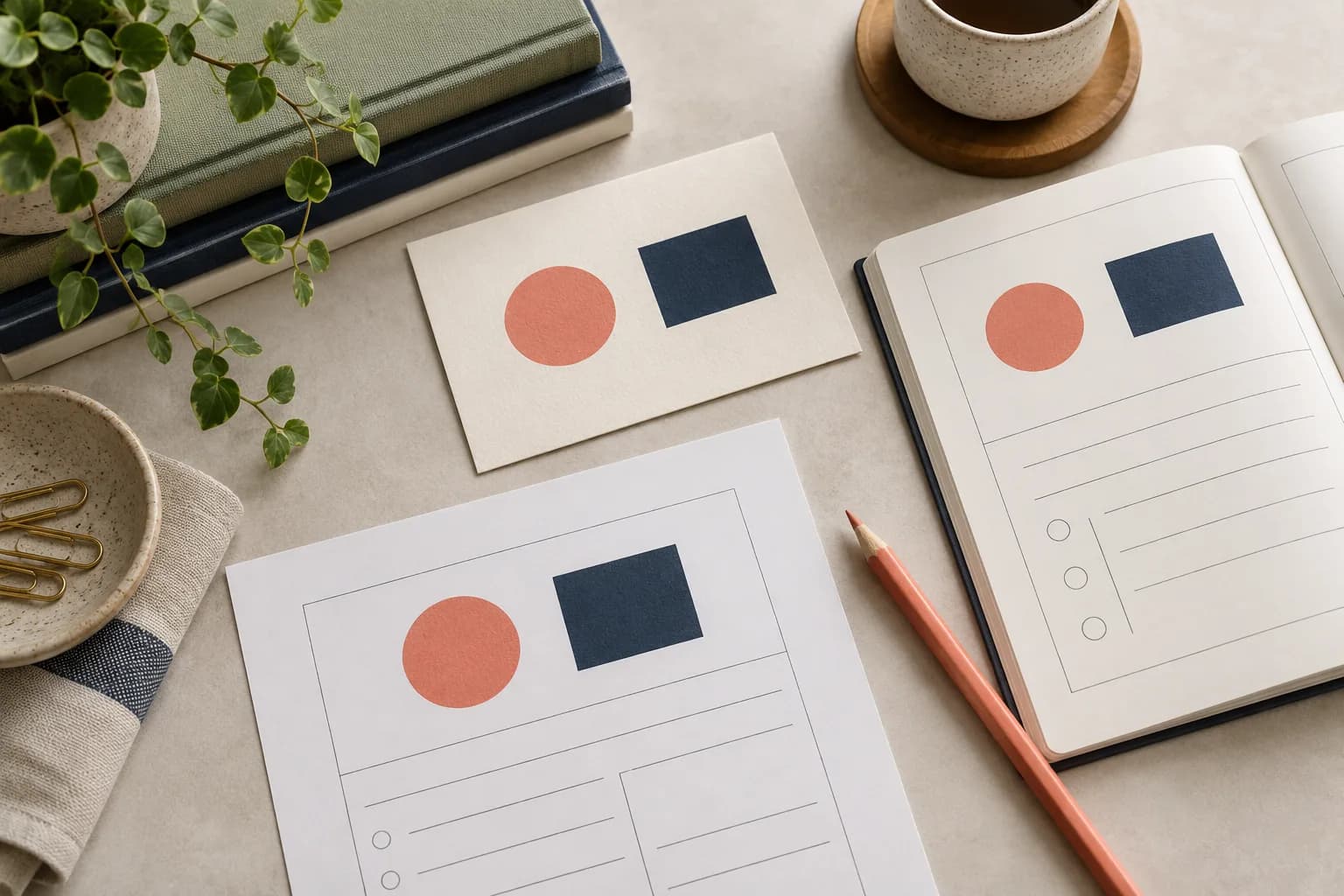
A useful practice page does not need to be bare. It needs a clear visual order: what the learner is doing, where they should begin, and which information belongs together. When every corner asks for attention, the adult may spend more time explaining the page than teaching the skill.
Start with one existing worksheet or screen. You can often improve it by removing competing demands rather than creating something entirely new.
Write the goal in ordinary language
“Read these taught words” or “Show two ways to make eight” is more actionable than a long collection of curriculum terms. Keep any adult-facing standards information separate from the child's directions.
Place the directions near the task. If a learner must repeatedly look to the top of a crowded page to remember what to do, repeat a short label beside the relevant section or divide the work into smaller parts.
Group what belongs together
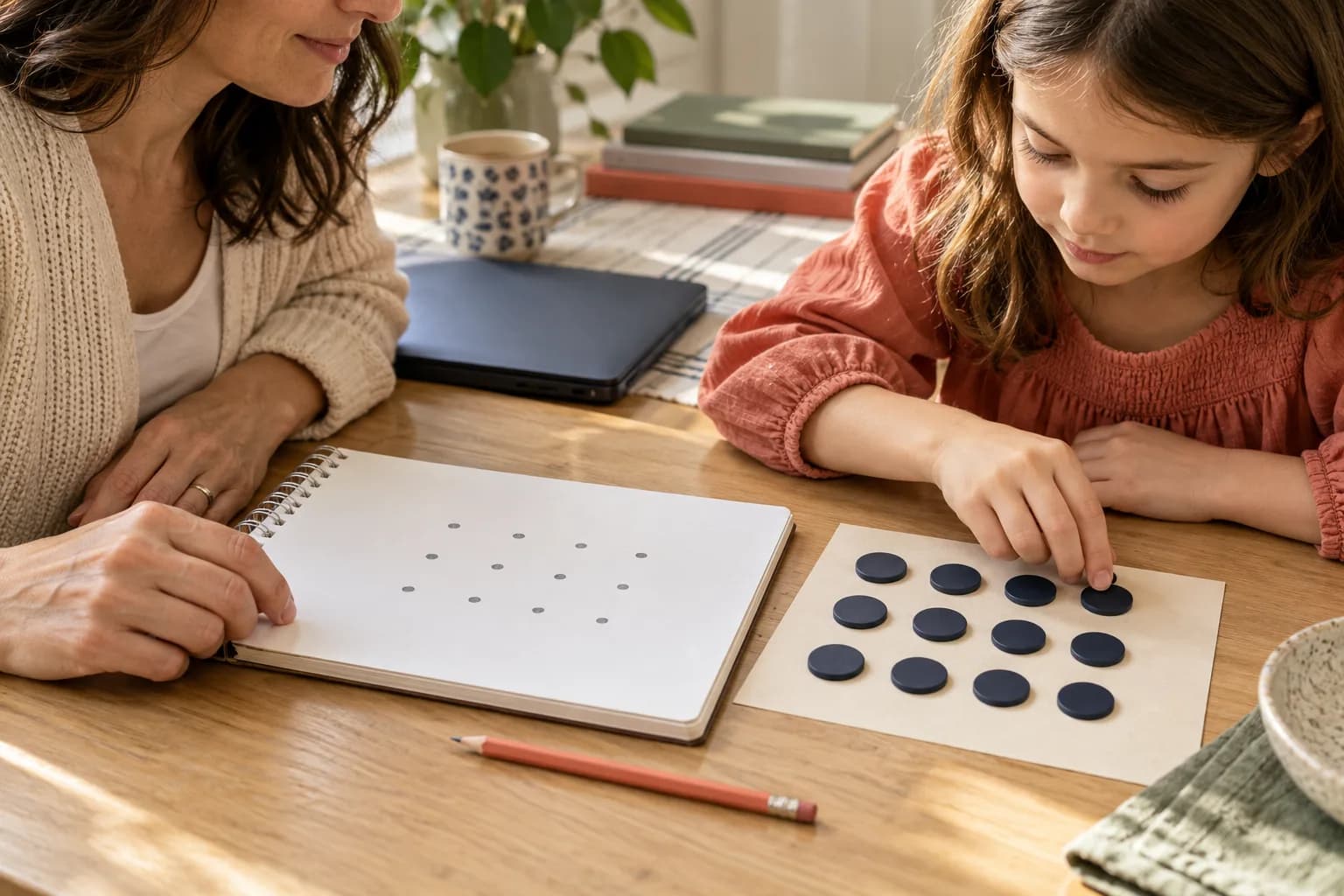
Keep a model close to its matching equation. Put a question beside the picture or passage it concerns. Use consistent spacing between separate items so that the learner can see where one task ends and the next begins.
For handwriting or drawing responses, leave enough working room. A compact page should not force a child to squeeze an explanation into a tiny box. Tighten decorative margins before reducing the space needed for the actual activity.
Use emphasis selectively
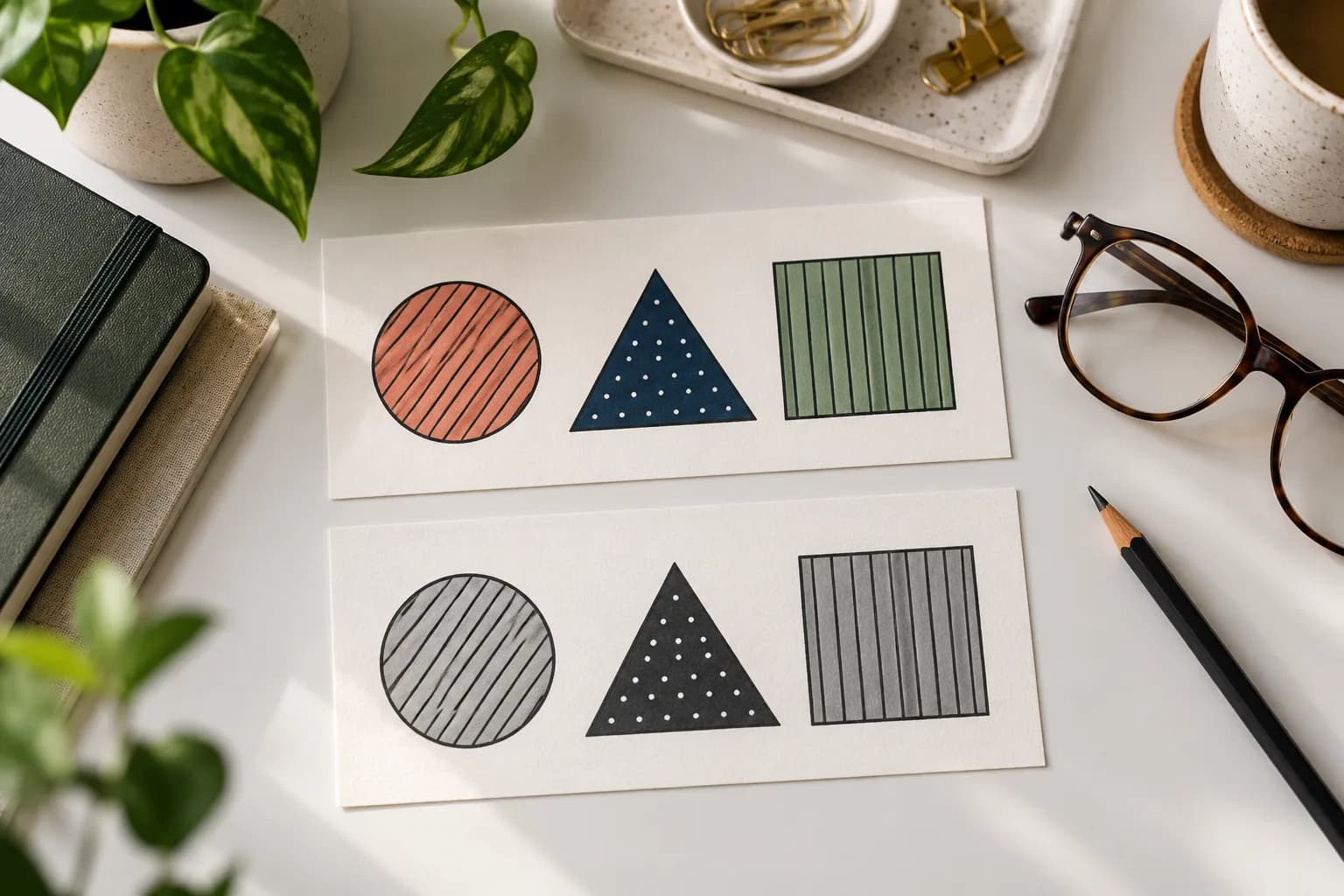
Choose one clear heading style and a small set of cue colors. Avoid multiple fonts, decorative borders around every item, and animations unrelated to the current action. If everything is emphasized, the learner has no obvious place to start.
A small illustration can establish a friendly theme. Check that it does not supply an unintended answer clue or obscure a letter, number, or instruction. In a reading check, an appealing picture should not replace attention to the printed word.
Watch one learner use it
Ask the child to tell you what they think they should do first. Notice unnecessary searching, repeated direction questions, or confusion between sections. These observations can reveal a layout problem without implying a problem with the learner's attention.
Make one change and try again: shorten the instruction, move the example closer, or reduce the number of items visible at once. Then check the learning itself. A calmer design is useful when it gives the child more room to read, reason, explain, and receive feedback about the intended skill.
Sources & further reading
Research background and Glow’s approach, alongside the original activity ideas in this guide.