Why Glow uses color cues in reading and math
Explore Glow’s approach to color, attention, and meaningful practice, with practical ways to connect visual cues to real learning tasks.

Give color a clear job: draw attention to useful information while the learner does the work of reading or reasoning.
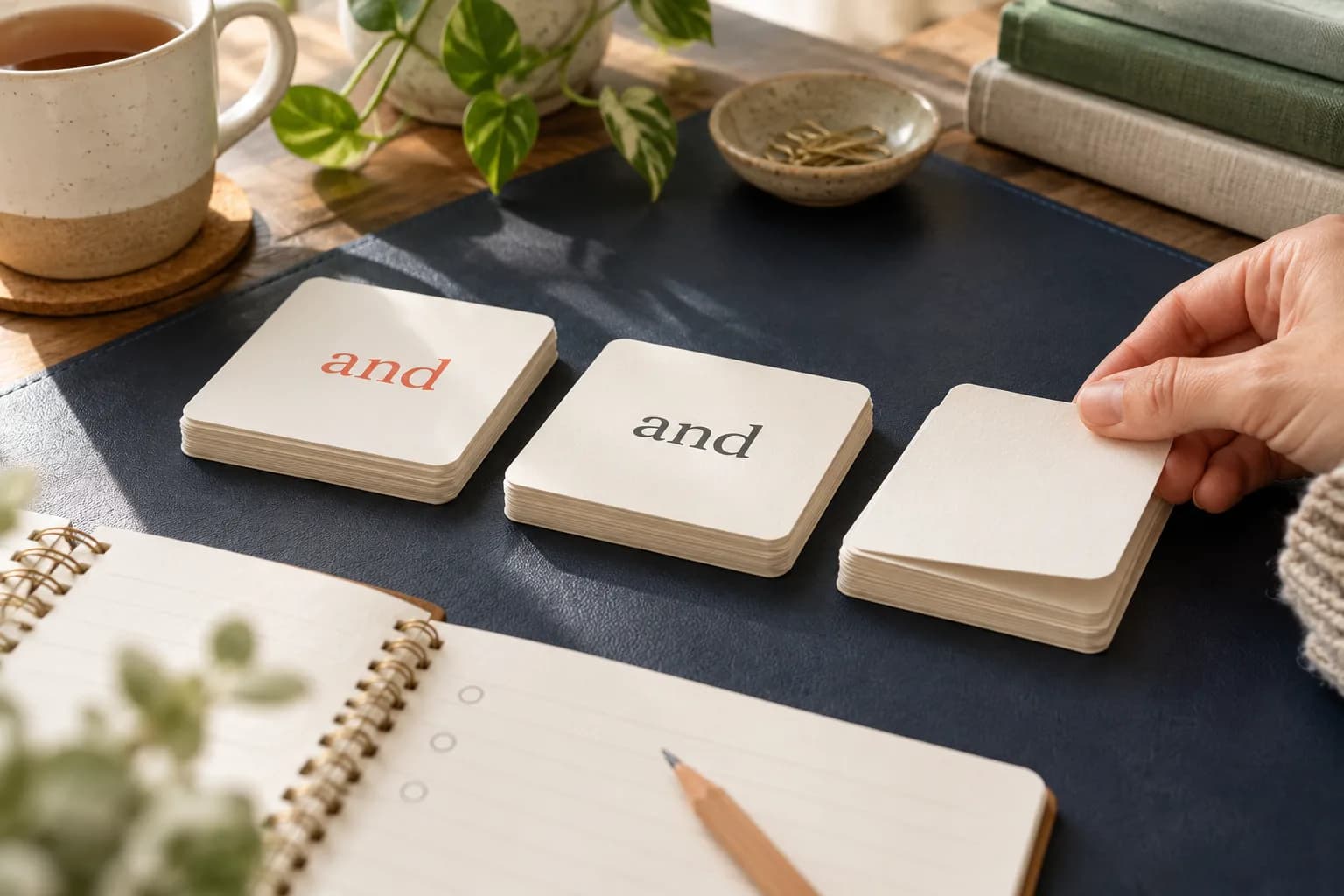
Color is part of Glow's identity, but its most useful educational role is specific. A cue can help a learner notice something worth attending to: a symbol, a group, or a relationship. The teaching still needs to explain what that information means and give the child a chance to use it.
Our white paper, Learn why Glow, connects visual cues with memory and meaningful practice. Its design principle is straightforward: make the important information easier to notice, then build understanding through explanation, recall, feedback, and return visits.
Give the cue a purpose
Before adding color to an activity, finish this sentence: “This helps the learner notice…” If the answer is simply that the page looks cheerful, you are making a decorative choice. That can be pleasant, but it has a different purpose from an instructional cue.
For a part-whole model, you might use two colors to distinguish the parts while keeping the whole visible. Explain the relationship aloud and label the parts. The colors should support that explanation rather than ask the child to infer a hidden rule.
Keep meaning stable
A cue is easier to interpret when its meaning stays consistent within the activity. If coral identifies one part in a model, use that same role while discussing the matching equation. Avoid switching the role halfway through a worked example just to create variety.
The important consistency is instructional. It does not require every subject or every material a child encounters to use the same palette. When a new representation uses a different convention, explain it.
Make the learner do something meaningful
After drawing attention to the model, ask the child to explain, build, read, or solve. A learner looking at a highlighted answer has not yet shown that they can retrieve it. Offer a fresh attempt, then give feedback that addresses the actual reasoning or spelling.
For a word, connect the letters to sounds and meaning. For a math fact, connect the symbols to quantities and an operation. Color accompanies that work; it does not supply the missing explanation.
Carry the skill beyond the cue
Revisit the material in ordinary print or with a different representation. Keep the underlying skill comparable so the change is manageable. Ask whether the learner can still read the word or explain the mathematical relationship.
This gives parents and teachers a practical way to use Glow alongside books, paper, and physical materials. The aim is a skill that travels. A well-chosen cue helps the learner find the important information today and gradually use it more independently tomorrow.
Sources & further reading
Research background and Glow’s approach, alongside the original activity ideas in this guide.