A better teacher-to-parent learning handoff
Share one clear learning goal, a short activity, and a useful observation prompt so home practice supports the classroom lesson.
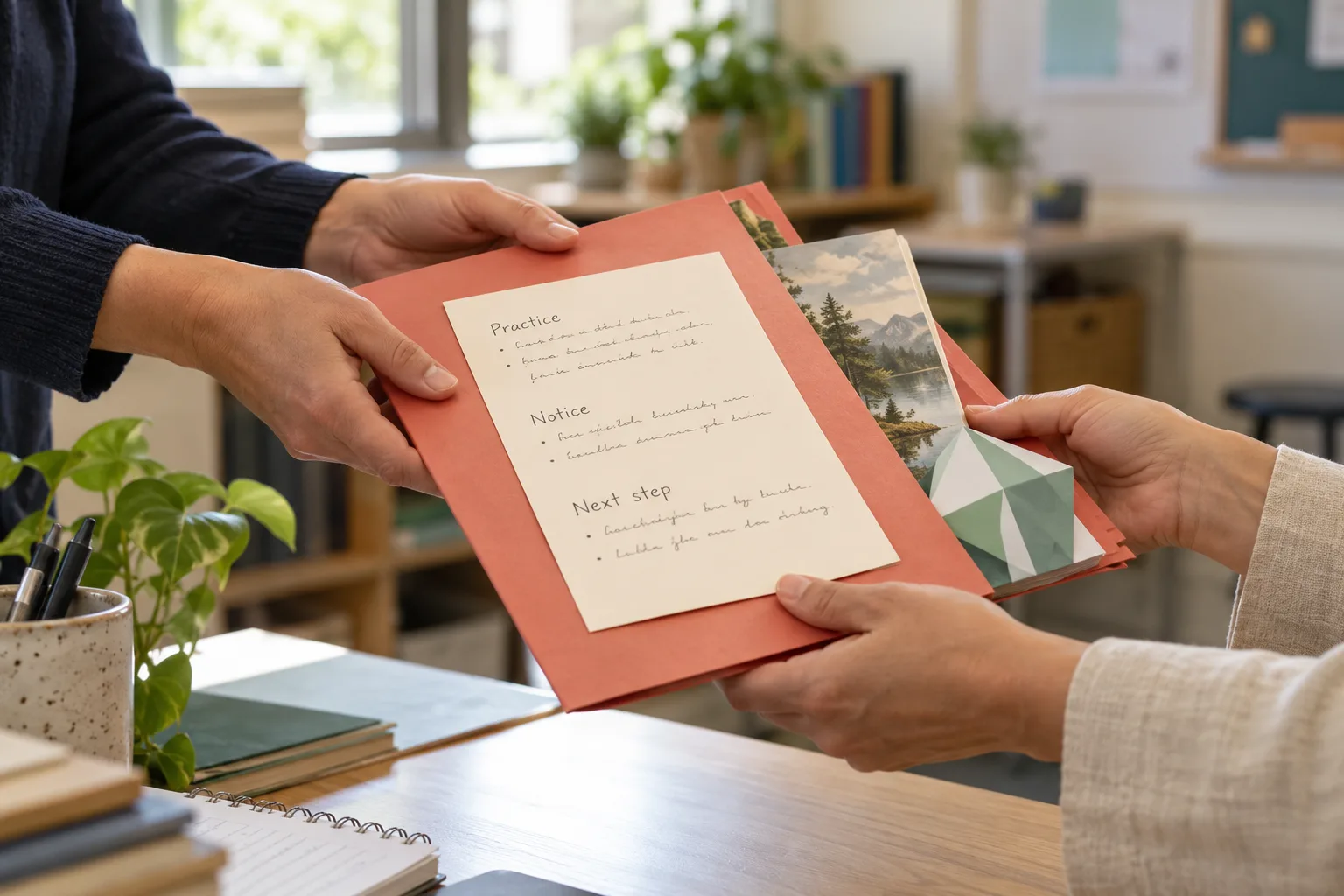
Give the next adult enough context to help without asking them to recreate the whole lesson.
A family receiving “practice more” has to guess what to do, how long to do it, and what counts as helpful. A clearer handoff gives them a small role in the next learning step. The goal is continuity, not turning the kitchen table into a second classroom.
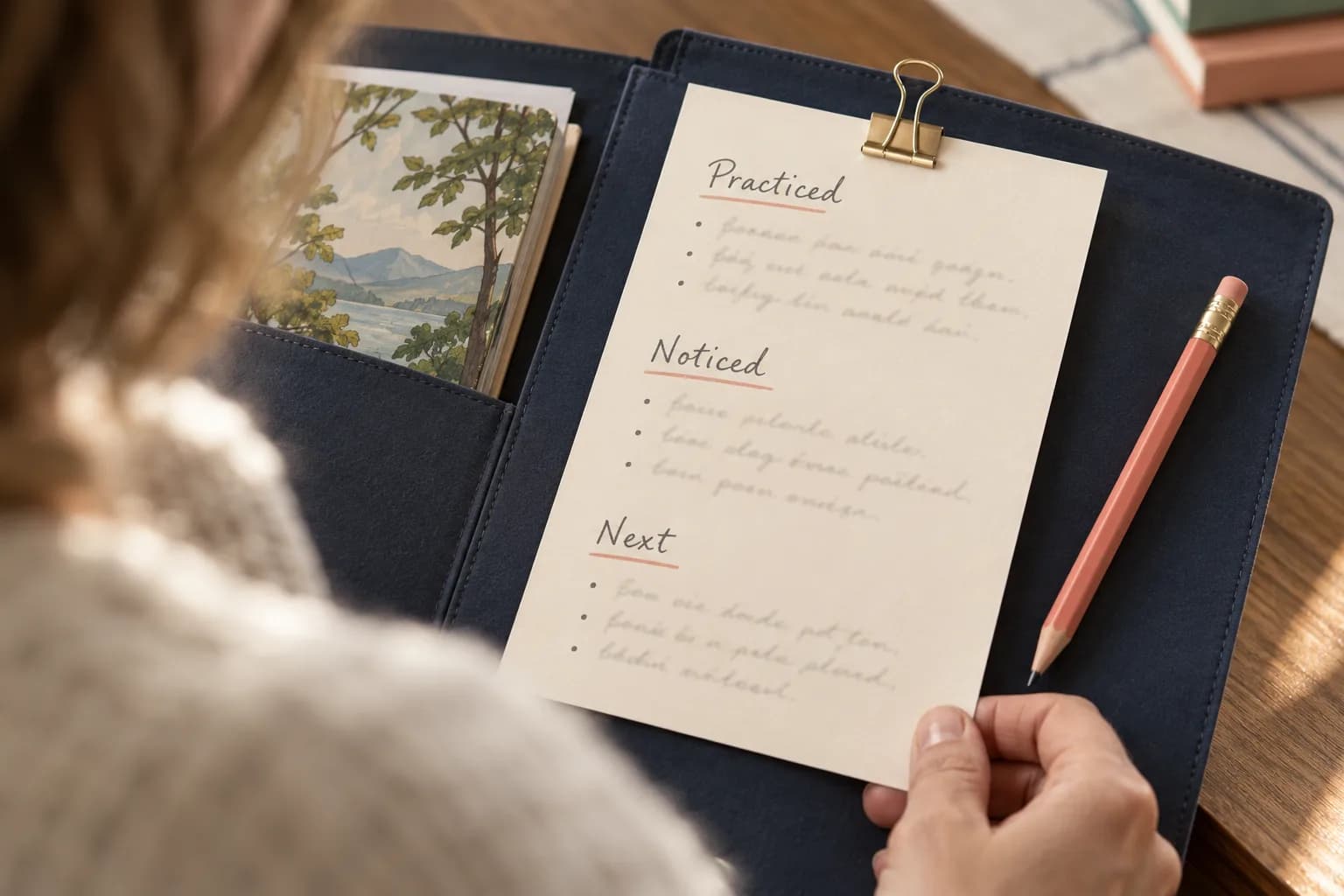
A useful message can contain four things: the focus, what the learner has already tried, the activity, and one observation to share back.
Name the focus and the support
Use ordinary language. “We are learning to use ten to solve 8 + 5” is easier to act on than a broad instruction to improve number sense. Add what happened: “Your child can fill the ten-frame with help and is beginning to explain the three left over.”
Keep the tone descriptive. Avoid labels about motivation or ability when the evidence concerns one task. A family can respond more usefully to a specific teaching need than to a judgment about the child.
Give a short, complete activity
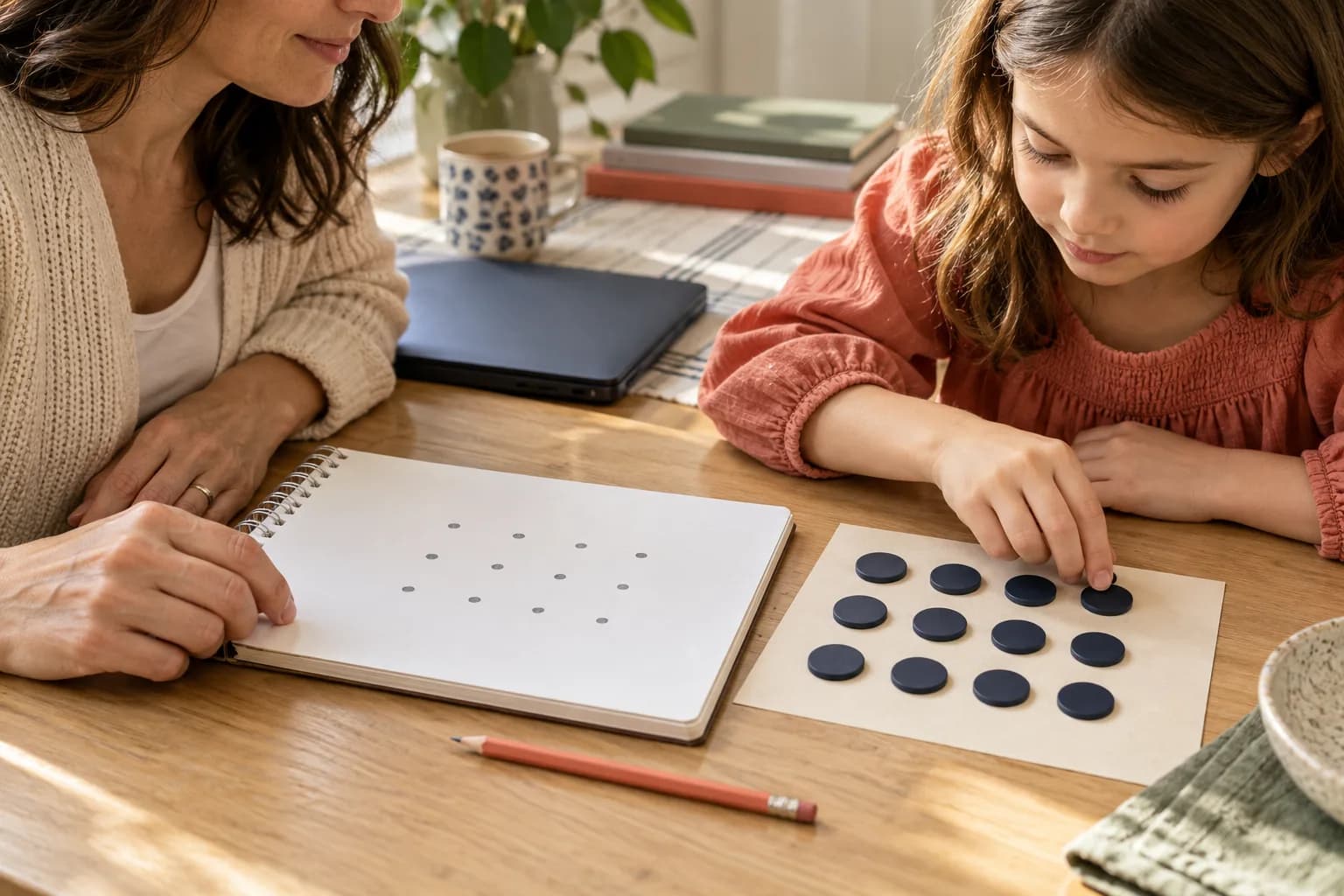
List the materials and the adult's role. “Draw ten boxes in two rows. Place eight counters, then five beside them. Ask how many from the five will fill the frame.” Explain when to help and what a useful model would look like.
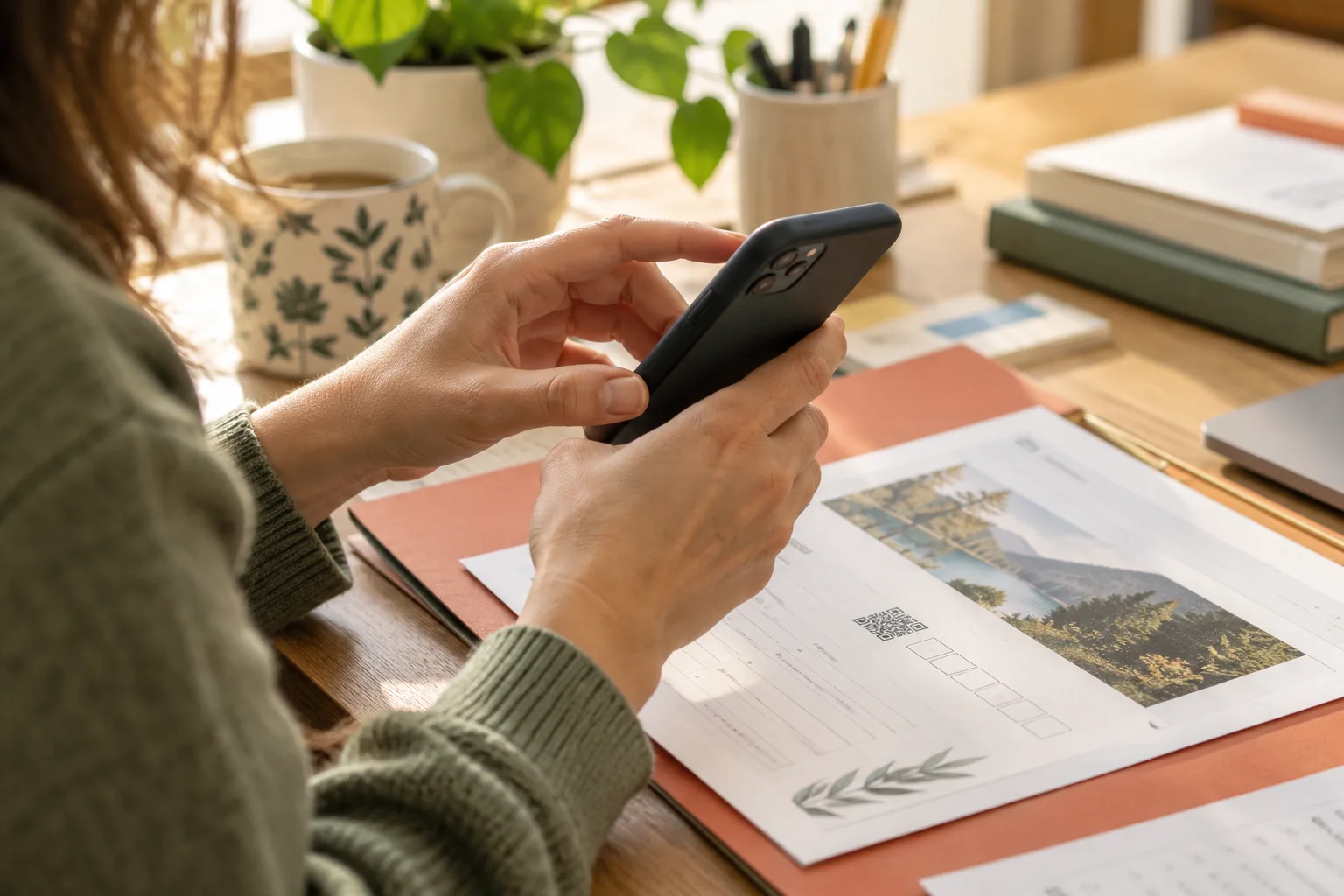
If you send a Glow activity, name the learner and the purpose through the appropriate private channel. A code or QR can make an approved task easier to open, while sign-in and the learner assignment keep it connected to the correct account.
Ask for one useful observation
Try, “Could your child explain what happened to the five?” or “Did they read both taught words before your help?” These questions give you more actionable information than asking whether the activity was completed.
Do not require a family to recreate formal testing conditions. Encourage them to help when needed and simply say what help they gave. Supported practice is worthwhile; it just tells a different story from an independent response.
Make room for real family life
Offer a paper option when screen access is inconvenient and a brief version when time is limited. Invite the family to report that the task was frustrating or unclear. That feedback can improve the next lesson rather than becoming a compliance issue.
Use the agreed school or family communication route and keep individual learner information private. At the next session, build on the observation you received. A good handoff closes a loop: the classroom explains a goal, home practice adds an experience, and the next teaching decision uses both.
Sources & further reading
Research background and Glow’s approach, alongside the original activity ideas in this guide.