Reading progress notes parents can actually use
Write short reading updates that explain the skill, the support needed, and one practical next step for home without reducing progress to a score.
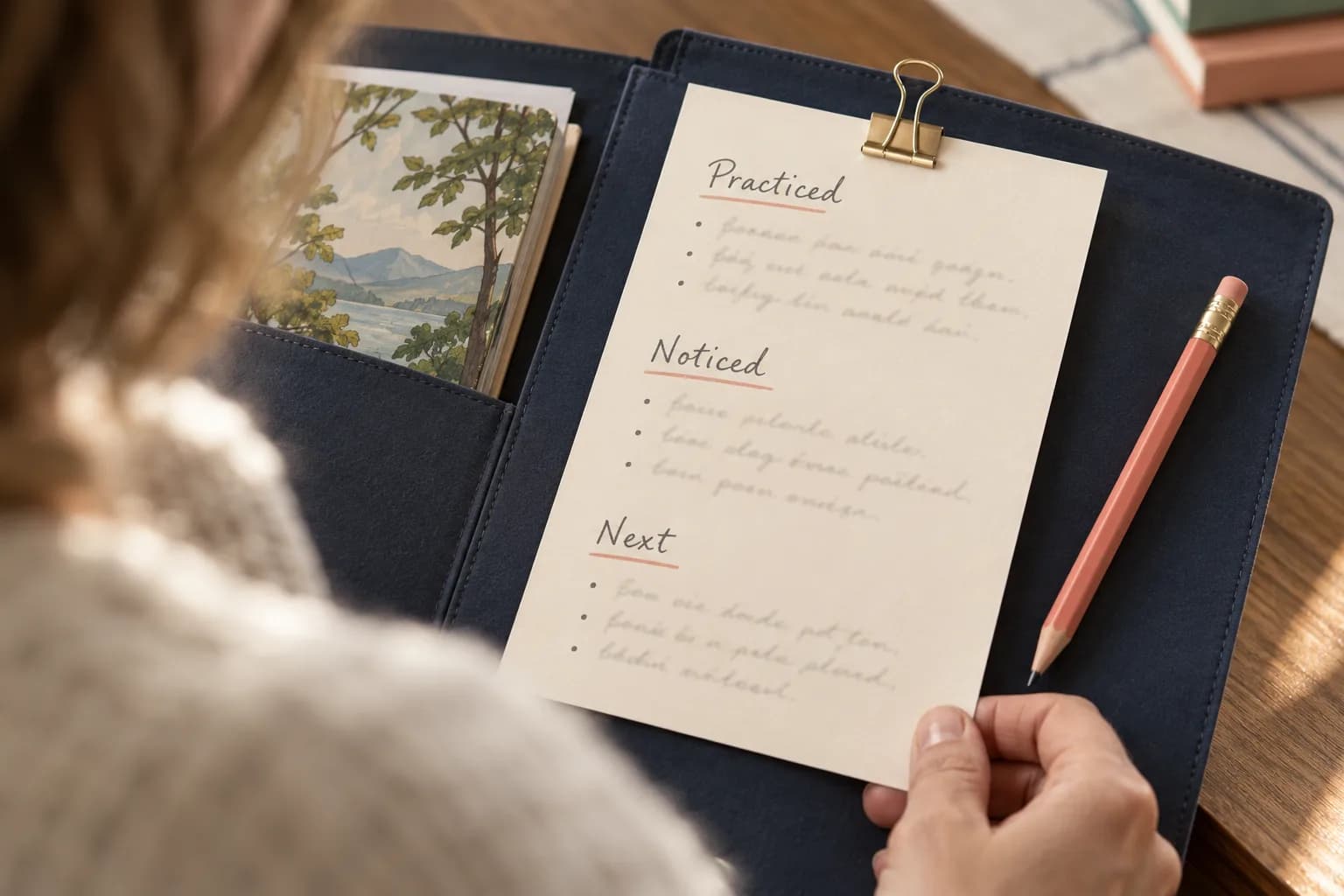
A useful reading update says what happened, how much help was needed, and what to try next.
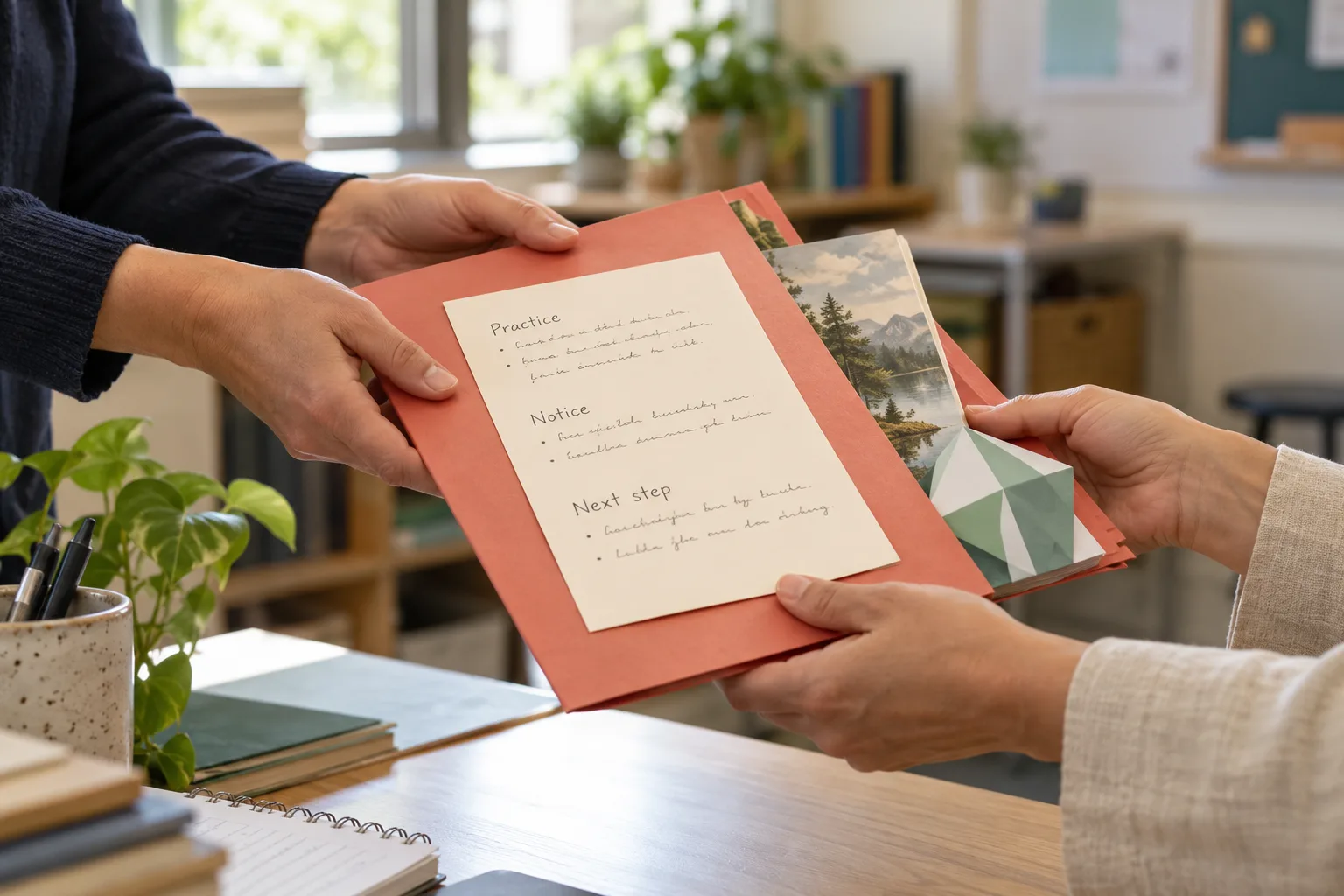
“Keep practicing reading” is well intentioned but difficult to act on. A useful progress note gives a parent a small, clear job and enough context to do it kindly. It can be only three sentences: what the learner practiced, what happened, and what to try next.
The same structure works for a teacher sending an update, a tutor recording a session, or a homeschool parent planning tomorrow. It turns a record of performance into a plan for support.
Name the actual skill
Write “reading short-vowel words with sh” rather than “phonics needs work.” Include one or two examples if they help. Keep the language understandable to an adult who was not present for the lesson.
For example: “We practiced ship and shop, then read them in short sentences.” This makes the focus visible without asking the family to interpret a curriculum code or a percentage.
Describe the support honestly
An independently read word and a word repeated after an adult's model are both useful experiences, but they tell you different things. Say which occurred. “Read ship independently; read shop after we blended the sounds together” gives a clear picture.
Do not describe a child's motivation or attention as a fact based only on a pause or missed answer. “Needed the directions repeated” is an observation. “Was not trying” is an interpretation that can make the next interaction harder.
Give one manageable activity
Offer a task that uses ordinary materials and takes only a few minutes. “Write ship and shop on two cards. Ask your child to read them, explain which letter changes, and read one in a sentence.” Include what to do if help is needed: model the sounds, blend together, then try again later.
If a printable or Glow activity is part of the plan, explain its role. Is it teaching, supported practice, or an independent check? The adult should know whether to help immediately or first allow a response.
Make the next observation easy
Invite one simple reply: “Could they read both words before your help?” A parent should not need to become a test administrator or produce a long report. A short answer can guide the next lesson.
Keep learner updates private and use the school's or family's agreed communication channel. In a shared classroom, discuss individual progress with the responsible adult rather than posting comparisons. The purpose is to make the next learning step more useful, not to rank children or turn every evening into an assessment session.
Sources & further reading
Research background and Glow’s approach, alongside the original activity ideas in this guide.