A ten-minute reading routine for busy families
Build a short reading routine with sound practice, taught words, connected text, and one useful observation to guide tomorrow.
A short routine works best when each part has a clear purpose and you stop while the child can still engage.
Ten minutes is a planning container, not a test of a child's attention span. Some days you will finish sooner. On others, a good conversation deserves more time. The aim is a predictable routine that includes teaching, an independent attempt, and a satisfying moment of reading.
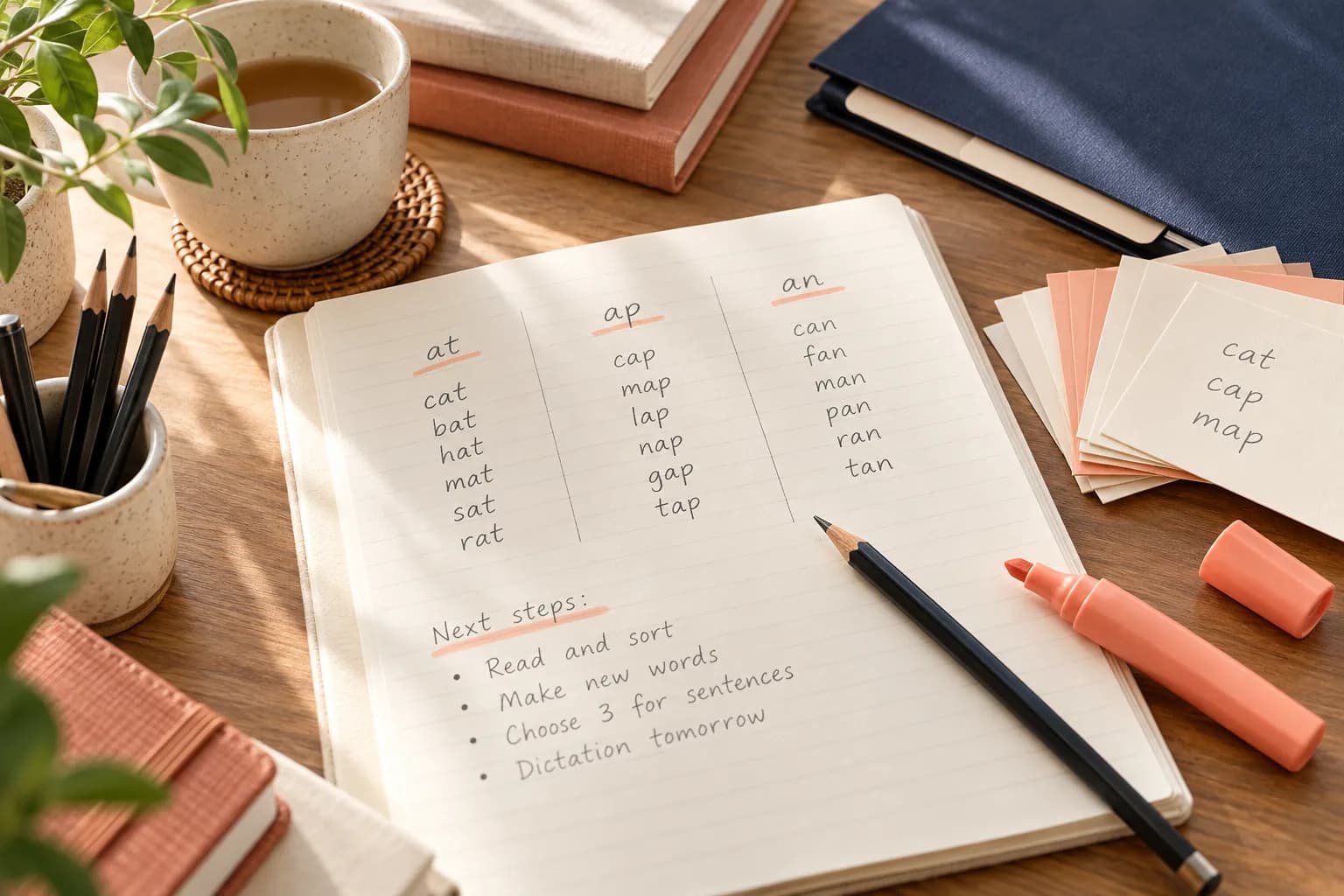
Set out one short text, a pencil, and a few letter tiles if you use them. Put the extra worksheets away. Decide on one focus before inviting the child over: perhaps blending a familiar pattern or recognizing two recently taught words.
Begin with something familiar
Spend the opening minute or two revisiting a small success. Ask the child to read a familiar word, build a word you say, or blend sounds you have already taught. Keep your feedback specific: “You looked through all three letters before reading it.”
If the familiar task is unexpectedly difficult, pause the plan. Check whether the child heard the directions and whether a brief model helps. A tired afternoon is not a reason to advance to harder material.
Teach one small thing
Use the next few minutes for the focus you chose. Demonstrate it clearly, then work through an example together. For a new spelling, say the word, identify its sounds, connect those sounds to the letters, and blend again.
Give the child a fresh example to try without you saying the answer first. If they need help, provide it. Mentally separate that supported success from the independent attempt so that tomorrow's plan reflects what actually happened.
Read for meaning
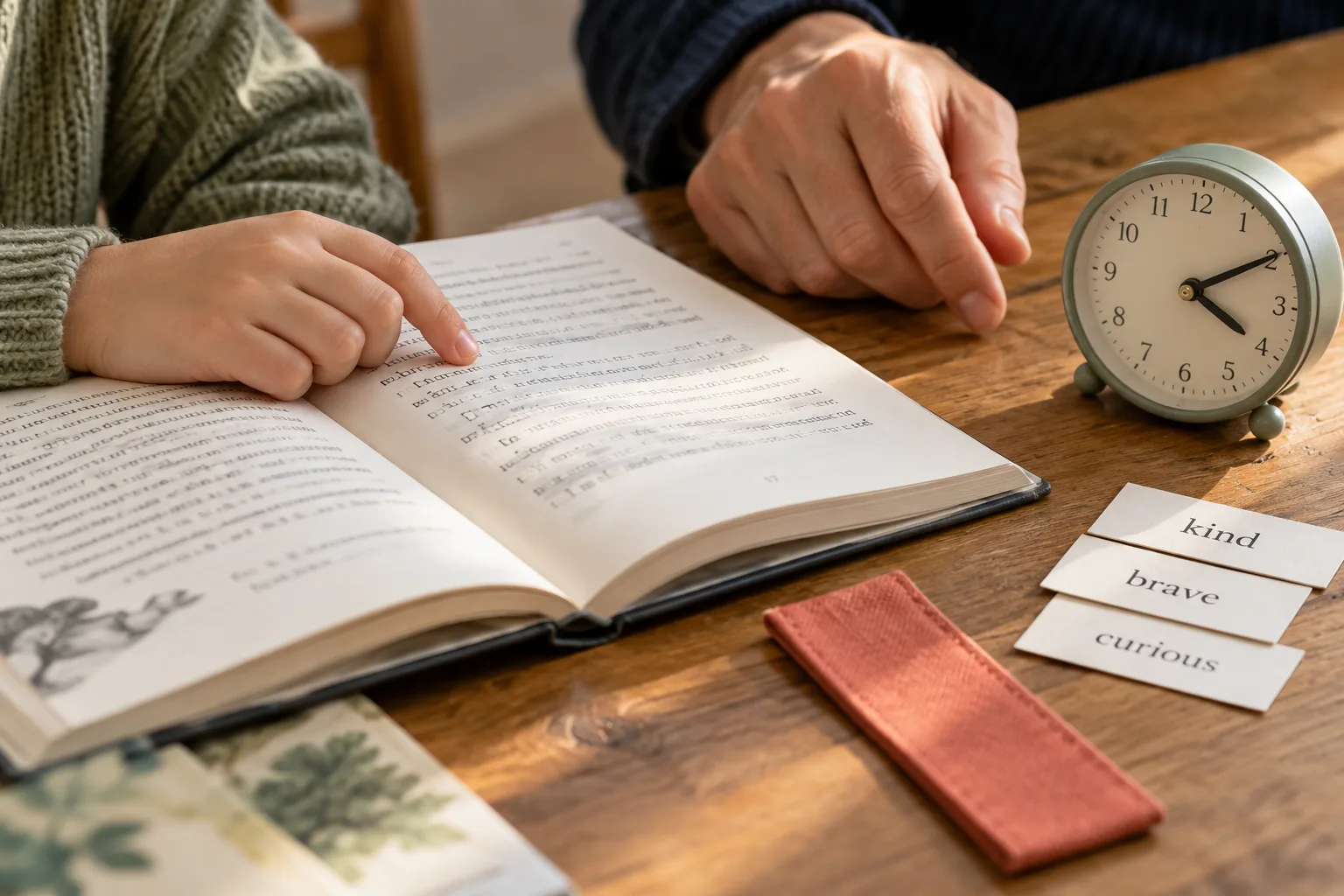
Move into a short passage or a few sentences suited to the child's taught skills. Let them do the reading they are ready for. Read untaught words when the material is intended for shared practice, and make that support ordinary rather than embarrassing.
Ask one natural question: “Why did the character go back?” or “Which part tells us where the dog is?” Accept a spoken answer. Reading practice should lead somewhere beyond naming the words.
Finish with one useful note
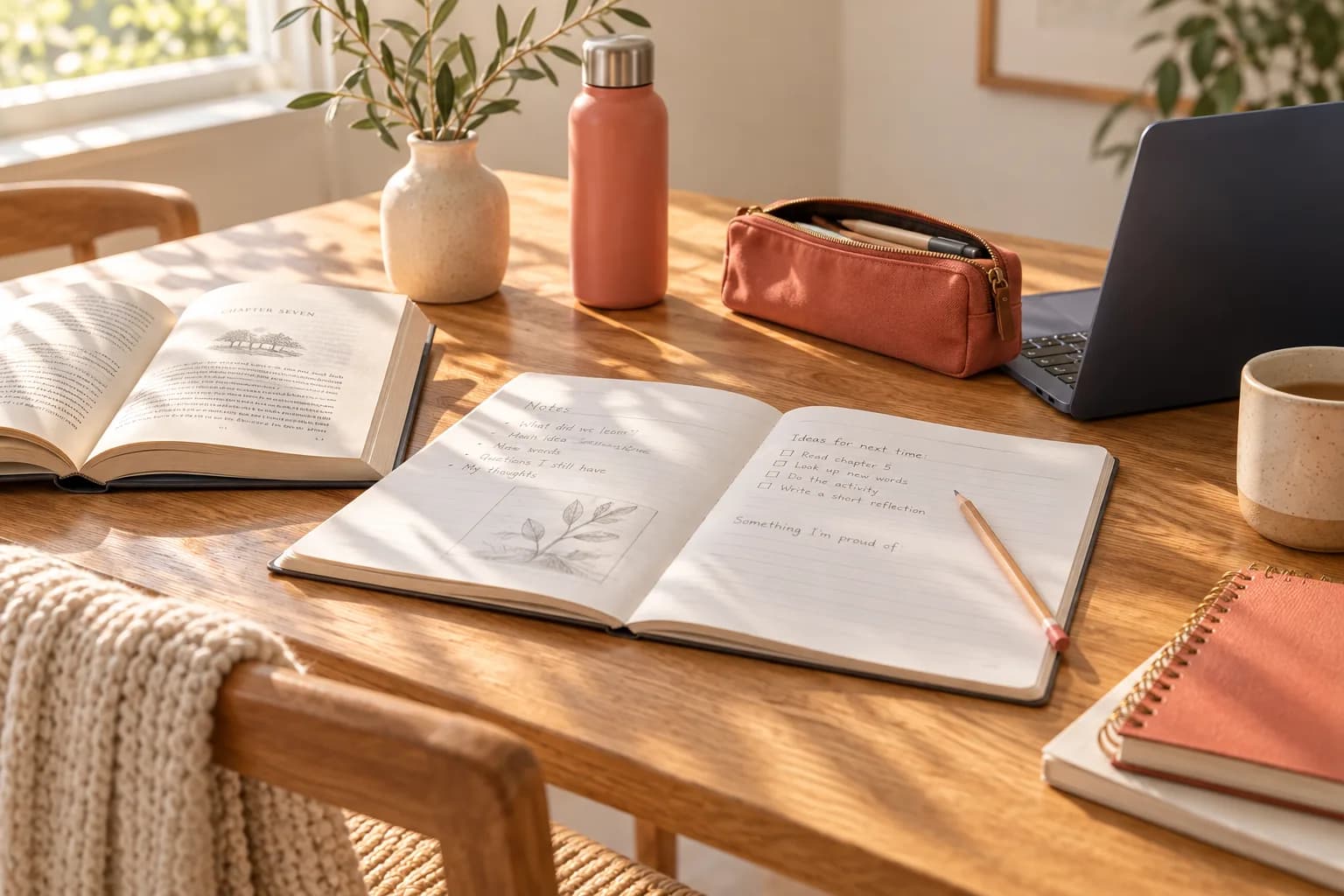
Write a sentence for yourself: “Blended short-a words independently; needed help with said.” That is enough to choose the next session. Avoid turning the last minute into a score report to the child.
Later in the week, return to the taught word in a different sentence or in plain print. If it is secure, choose a new small focus. If it needs another look, change the support: use tiles, a clearer model, or a shorter text. A repeat of the teaching goal can still feel like a fresh activity.
Sources & further reading
Research background and Glow’s approach, alongside the original activity ideas in this guide.