Why M.I.R.E.R. returns to a skill after practice
Use a later recheck to see what stays available after a gap, with comparable questions, useful context, and a practical next teaching decision.
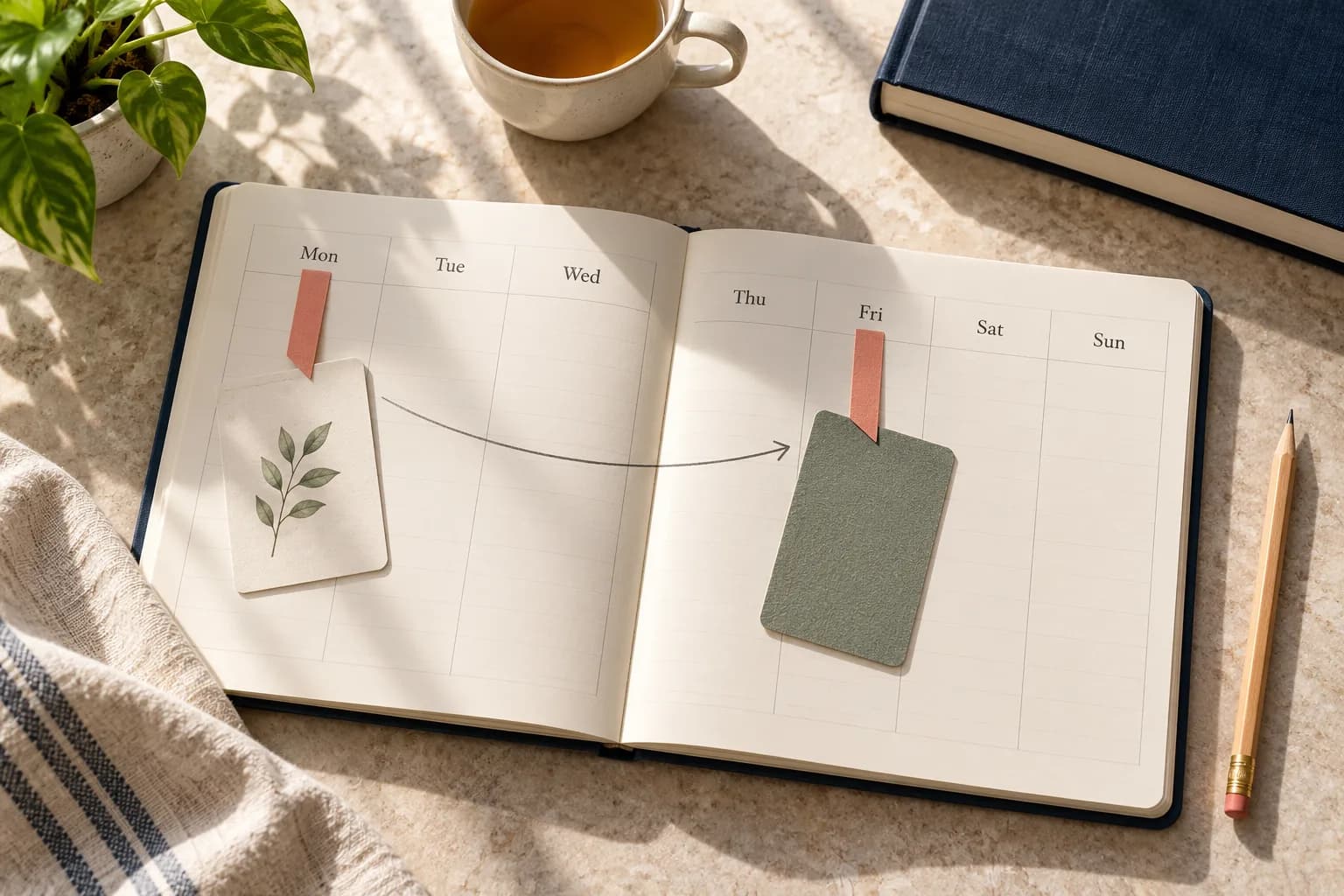
An immediate success shows what happened today; a later return helps you decide what support is still useful.
Right after a worked example, a learner may still have the explanation in mind. That is a good time to practice. It is not the only time to check understanding. A later return asks whether the child can recover and use the learning after doing other things.
M.I.R.E.R. includes this follow-up because a reinforcement activity should lead to another teaching decision. The question is whether the chosen support is helping the learner become more independent over time.
Choose the return deliberately
A brief recheck after roughly a week can be a useful planning default, adjusted to the learner and schedule. It is not a universal deadline or a rule that every skill should be secure by then.
Choose a small number of comparable tasks. If the original focus was nine-times facts through equal groups, keep that relationship visible in the recheck design. Do not add unfamiliar reading or a more complicated interface and then attribute every difficulty to forgotten math.
Begin before the reminder
Let the learner attempt an item before showing the previous worked example. Make the instructions clear, allow thinking time, and record the first response. Then offer feedback or a model as needed.
For a reading skill, use ordinary print or a fresh sentence with appropriate spelling demands. For math, include a different but related example or a brief story. These changes help you see whether the learner can use the relationship beyond one exact display.
Read the result in context
One missed response is not the entire story. Look at the pattern, the support needed, and the conditions. If the child was interrupted or misunderstood a direction, note that before changing the plan.
A correct answer with a clear explanation gives different information from a guessed answer. A child who reconstructs a fact using a sound strategy may be making meaningful progress even when recall is not yet quick.
Decide what to do next
If the skill is available independently, continue the learning plan and include occasional review. If a small prompt restores it, choose a short reinforcement step. If the underlying relationship is unclear, reteach it with a more useful model or revisit a prerequisite.
Finish with a concrete observation the child can understand: “You remembered how to make ten without my example.” The return should feel like a normal part of learning, not a surprise attempt to catch the learner out. It gives both adult and child a clearer view of what is becoming dependable.
Sources & further reading
Research background and Glow’s approach, alongside the original activity ideas in this guide.