Independent and supported answers tell different stories
Record a learner’s first response separately from prompts and models so classroom check-ins guide the right kind of reinforcement.
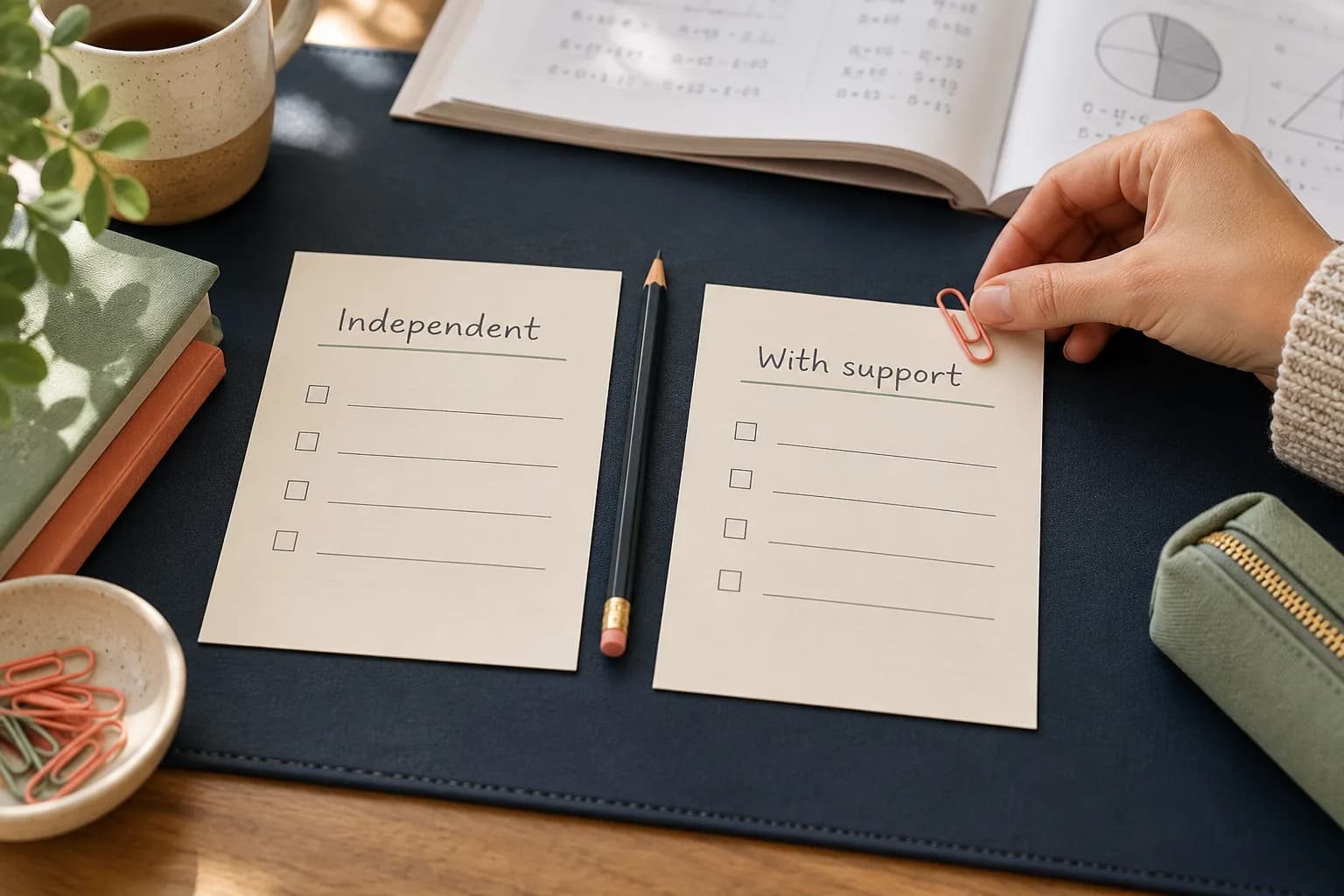
Let the first response show what the learner can do now, then let teaching help them take the next step.
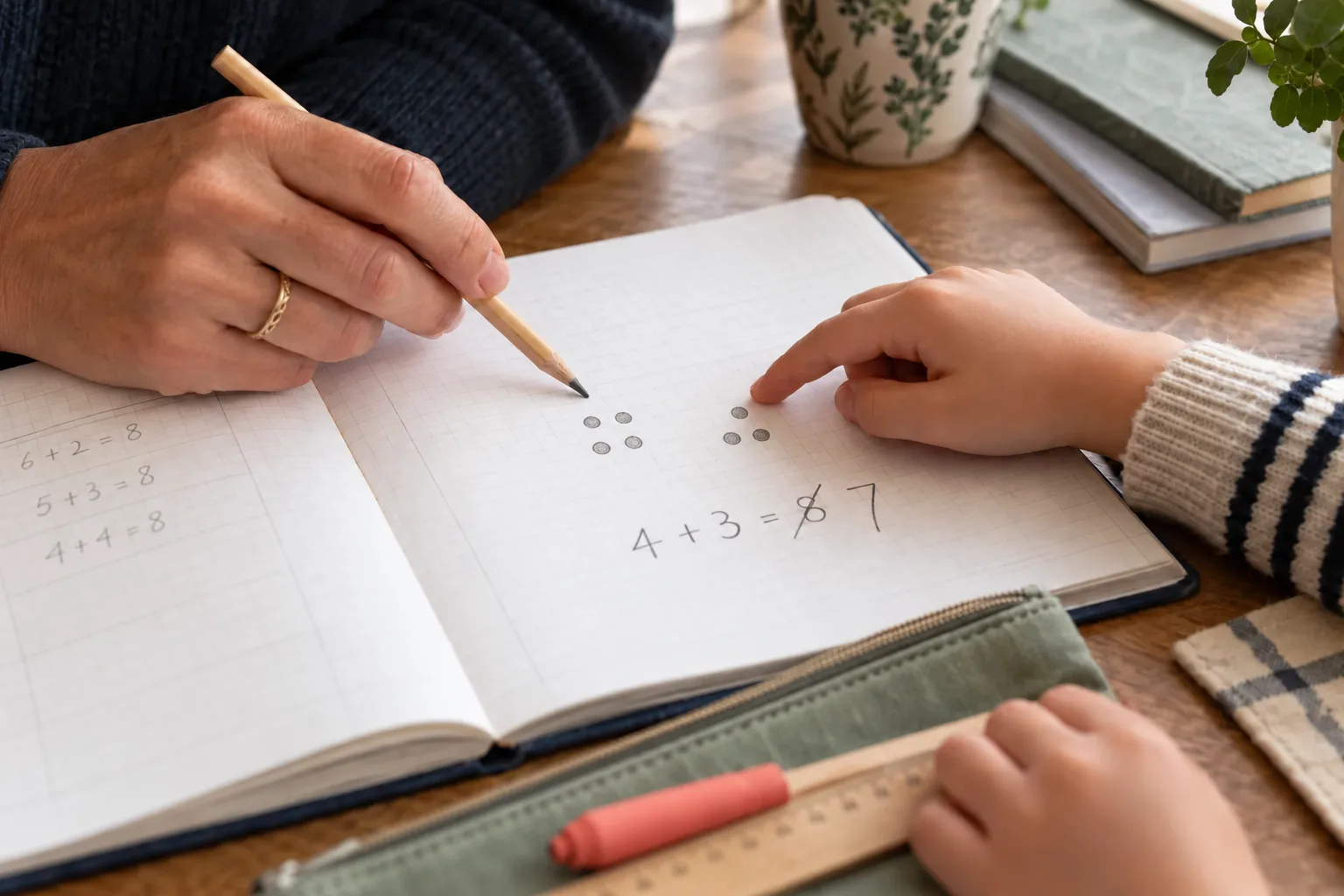
A child answers correctly after an adult points to the right group of counters. That is a useful learning moment. It is also different from answering correctly before the prompt. When both are recorded simply as “correct,” the next lesson may assume more independence than the learner has shown.
Separating the moments lets adults teach generously while still keeping a clear picture of progress. The distinction concerns the kind of evidence, not the value of the child or the effort they made.
Decide what the first attempt means
Before a check, explain the task and make sure the learner can access it. Read directions aloud if the goal is math rather than reading directions. Provide agreed accessibility supports that do not give away the skill being checked.
Then offer a comparable fresh item and allow a response before an instructional hint. Define the supports in your notes so another adult understands the conditions. “Independent” should not mean the child was denied necessary access to the task.
Teach after observing
If the response is incorrect or the child is unsure, provide feedback and a useful model. Ask them to explain or try again. You do not need to preserve confusion to collect a longer record of mistakes.
Note what changed after support. “Needed a reminder to start at the first number” suggests a different next step from “needed the entire addition model explained.” The type of prompt matters.
Keep different evidence types separate
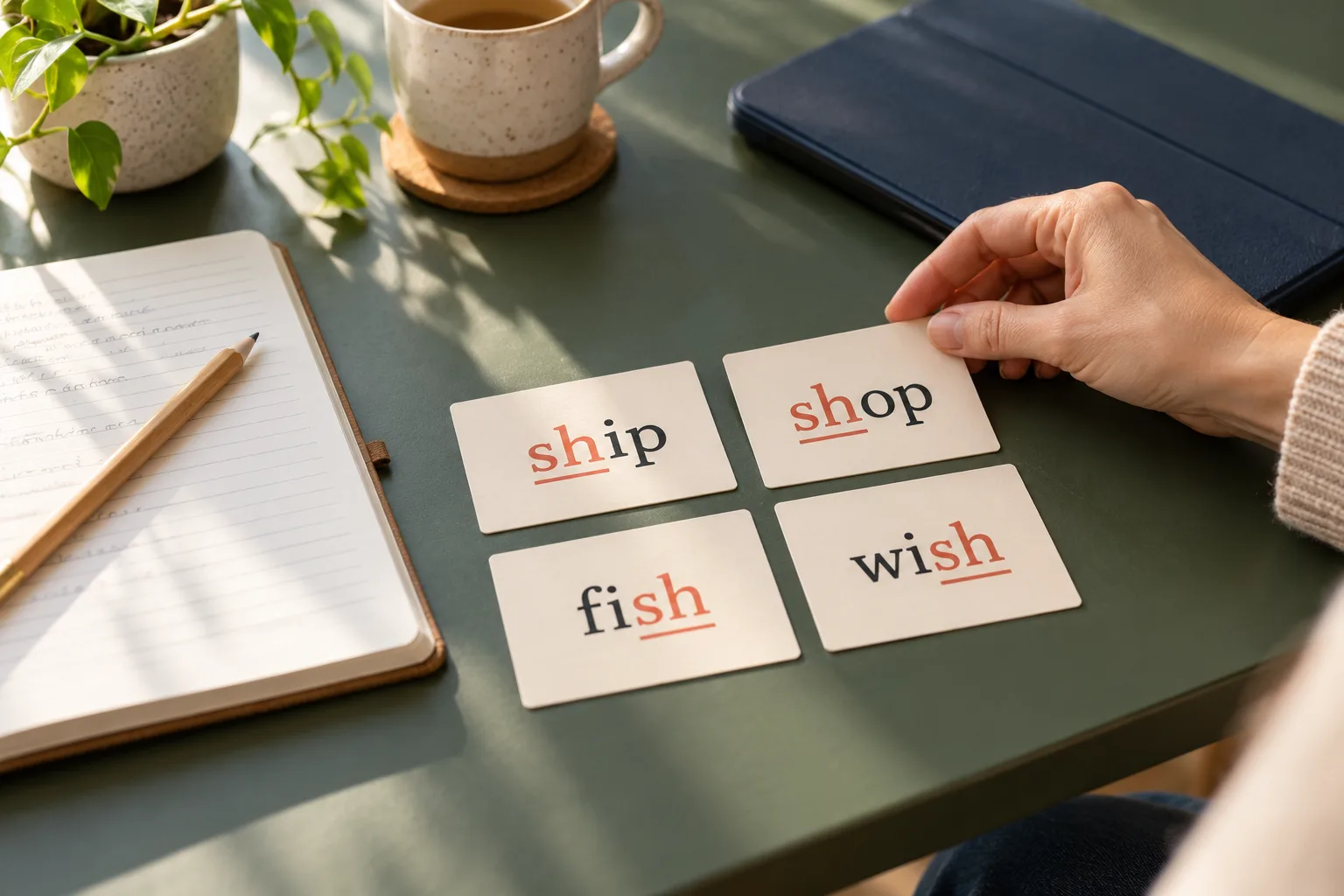
A learner saying “I know this” is a self-check. An app checking a submitted numerical answer is a checked response. An adult hearing a child read a word is another kind of observation. Each can help, but none should quietly be converted into another.
In M.I.R.E.R., reading these signals separately helps adults judge the suggestion. A self-check may prompt a closer look; it does not by itself establish that a child read a printed word accurately aloud.
Use the distinction to plan
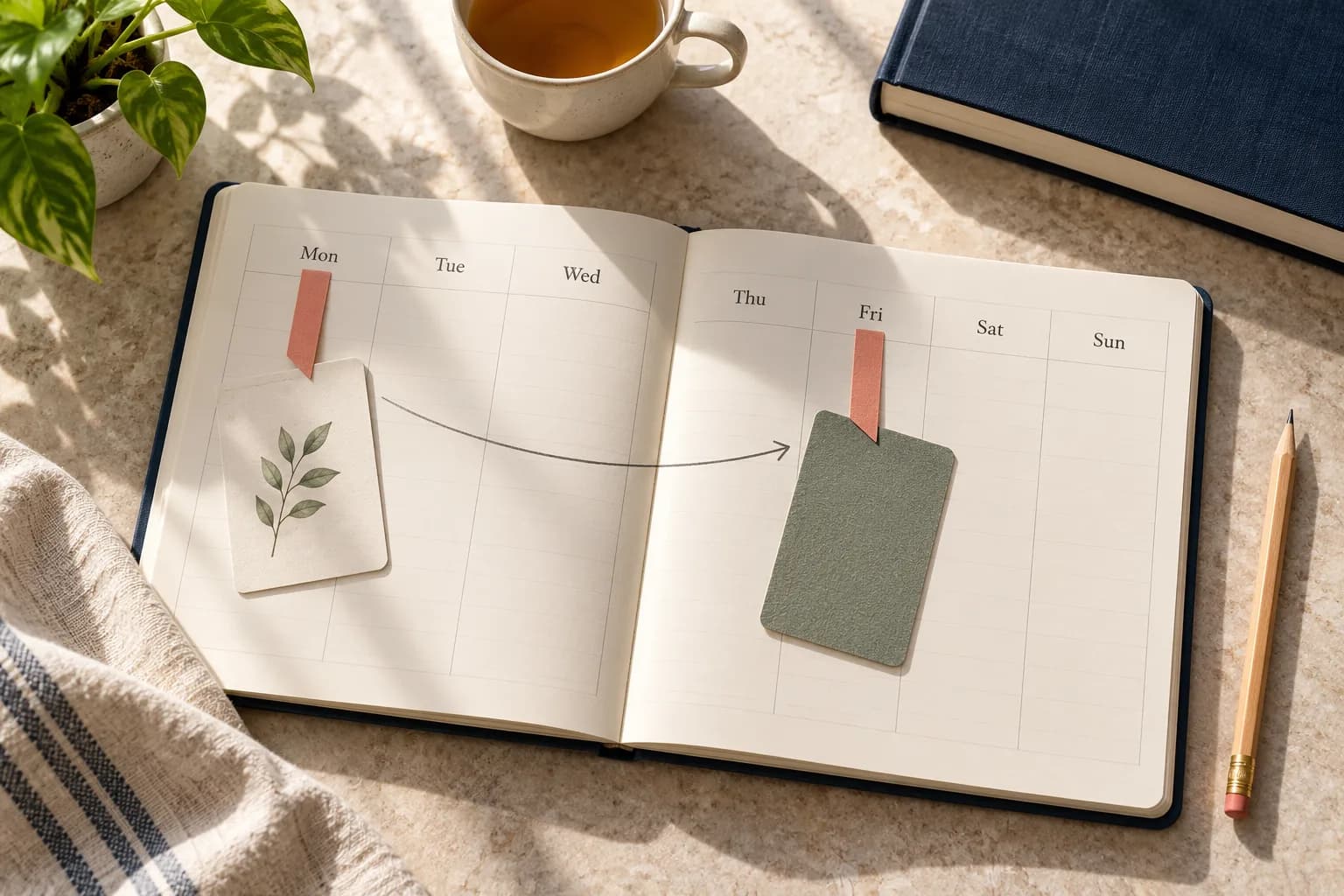
Choose a next step based on the pattern. Repeated independent success may support moving forward with later review. Success only after a model suggests more guided practice and a carefully chosen fresh check.
When communicating with families, use plain language: “Could solve it after we built the groups; next time we will try one before using counters.” That statement shows progress and explains the plan. It also gives the next adult a practical way to continue without either over-helping immediately or withholding support when it is needed.
Sources & further reading
Research background and Glow’s approach, alongside the original activity ideas in this guide.