M.I.R.E.R. for reading: reinforce a specific spelling pattern
Plan targeted reading reinforcement around taught spelling, adult observation, meaningful text, and a later plain-print check.

Use a reading signal to choose a closer look, then teach the specific sound-spelling connection and check it in a new context.
A reading practice signal deserves careful interpretation. A learner requesting more practice may be unsure of a word, but that request is not the same as an adult hearing the word read incorrectly. M.I.R.E.R. keeps those kinds of evidence distinct so an adult can choose a useful next step.
Consider an illustrative learner who repeatedly needs help with taught sh words. The adult's job is to find out whether the difficulty concerns the spelling, blending, meaning, or the amount of text on the page.
Listen before choosing the activity
Ask the child to read a small set such as ship and shop, using patterns they have already been taught. Listen to the first response. Then ask them to build one word or explain its meaning.
If they say the separate sounds for s and h instead of the taught sh sound, the spelling connection needs attention. If they know sh but struggle to blend the word, choose support for blending. Those are different teaching decisions within the same topic.
Make the target explicit
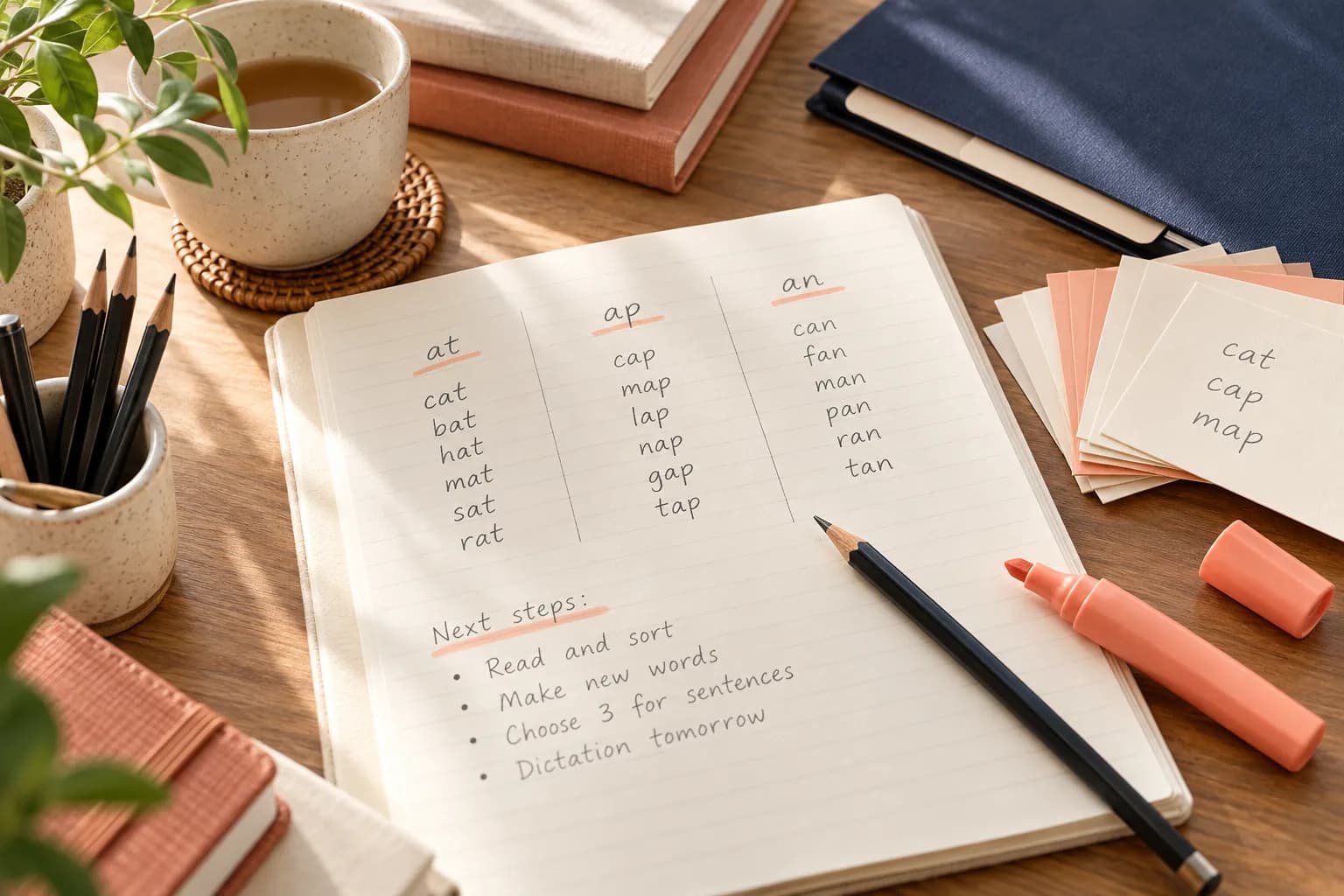
Show that sh represents one sound in these words. Say the word, identify its sounds, connect them to the letters, and blend. Use a short sentence to establish meaning.
Then change one familiar part, such as the vowel in ship and shop. Ask the learner to describe what changed. Keep your examples within the phonics already taught so that an unrelated new spelling does not obscure the target.
Bridge practice into ordinary text
Use the chosen Glow reinforcement activity alongside a paper or spoken task as appropriate. A colored word display can support attention, while the actual teaching concerns the spelling and its meaning.
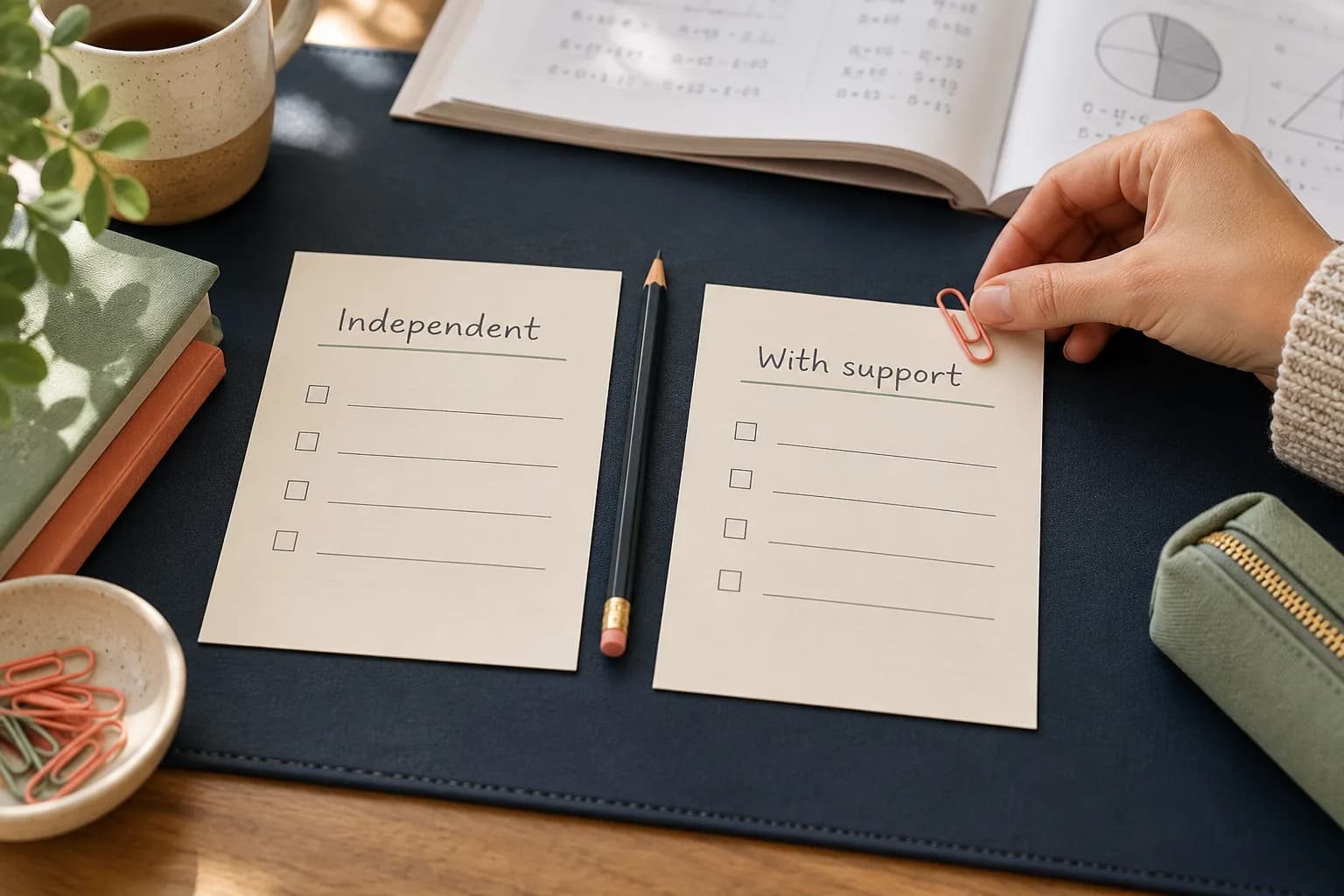
Next, place the word in a fresh, readable sentence. Supply untaught words when the activity is adult-supported, and distinguish that support from independent reading. Do not ask a self-check button or a card flip to stand in for a verified oral-reading assessment.
Check what travels
After a gap, show a taught word in plain print and invite an independent attempt. Use an additional appropriate example to see whether the spelling connection extends beyond one memorized card.
Record a specific observation and choose the next support from it. “Reads sh as one sound; still needs help blending the remaining sounds” gives the adult something to teach. A broad label such as “weak reader” does not. The cycle supports better decisions when each observation remains connected to a small, teachable skill.
Sources & further reading
Research background and Glow’s approach, alongside the original activity ideas in this guide.