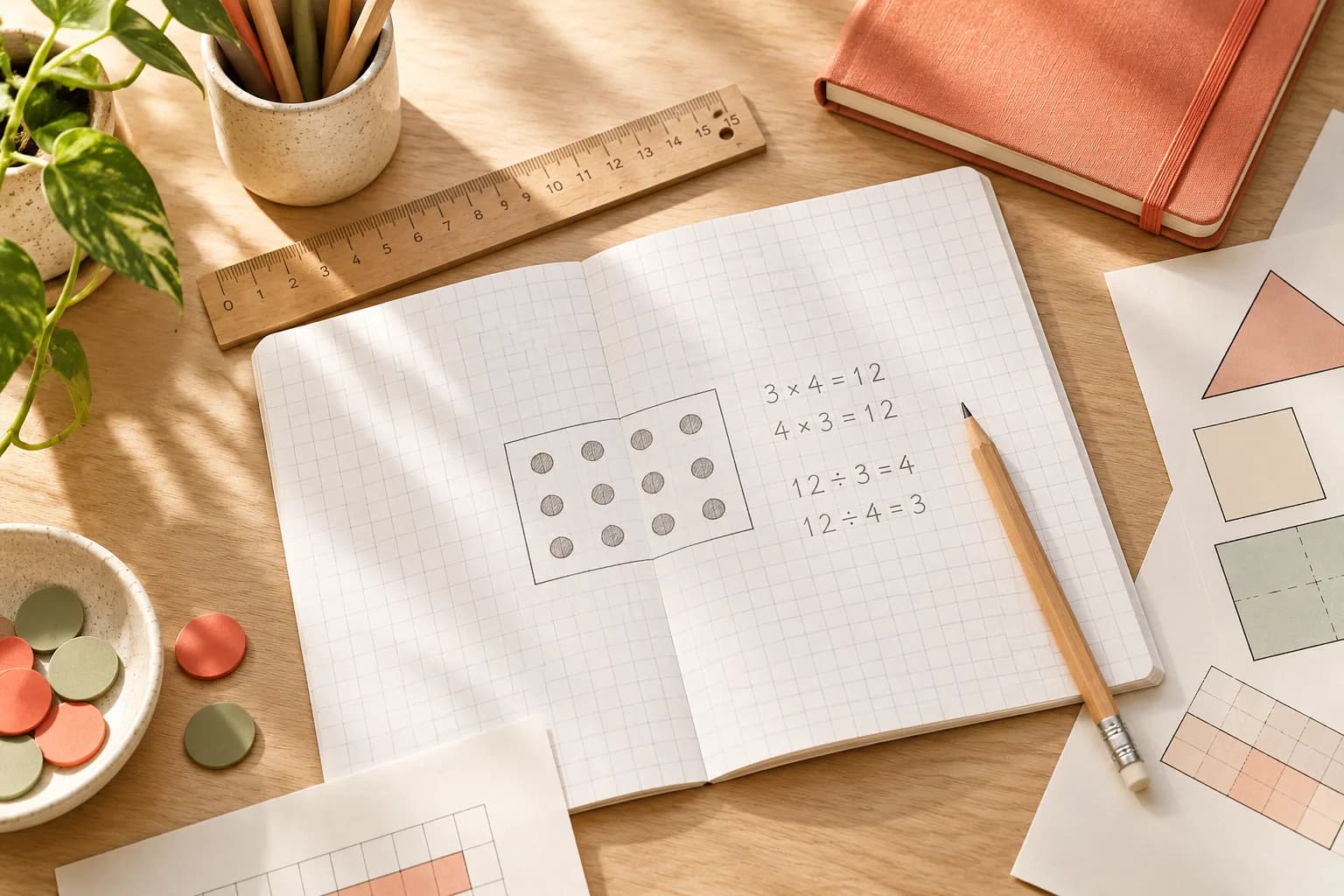
Use math mistakes to choose a better next lesson
Turn an incorrect answer into a specific teaching decision by checking the model, strategy, notation, and support a learner needs.
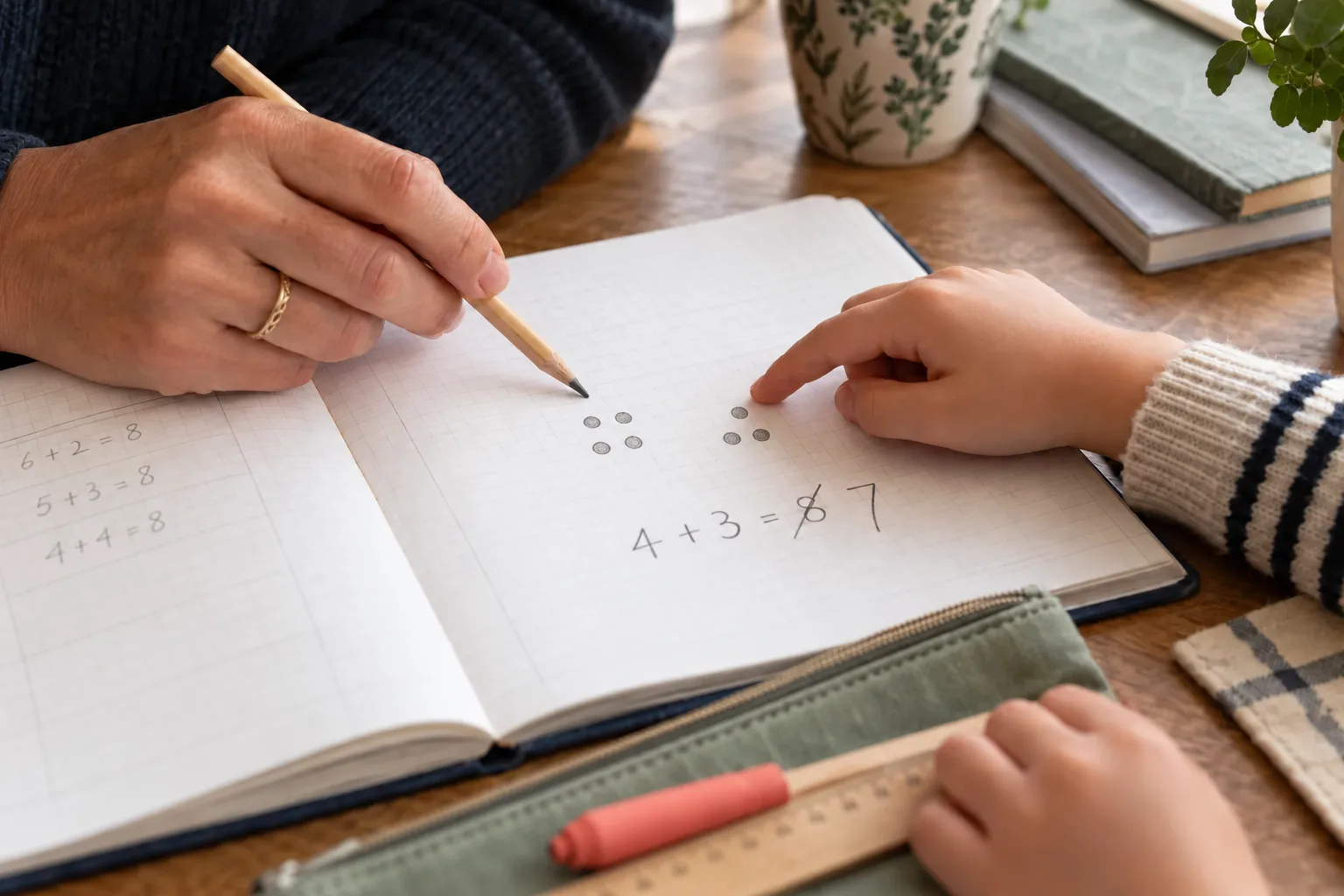
An error becomes useful when you identify the step that needs teaching and choose a focused response.
Two children can give the same incorrect answer for different reasons. One may misunderstand the operation; another may know the strategy but miscount; a third may misread a symbol. Assigning all three another page of the same problems can miss the teaching opportunity.
Start with curiosity. Ask the learner to show how they thought about the problem, using words, a drawing, objects, or gestures. You are looking for the point where the reasoning and the task stopped matching.
Check the meaning first
For 8 + 5, a learner might remove five counters because they interpreted the plus sign as subtraction. Before practicing recall, connect the symbol to joining two amounts. Use a small story and ask them to build it.
If the operation is understood but the total is miscounted, watch the counting. Are objects skipped or counted twice? A clear arrangement may solve a different problem from the one you initially suspected.
Look at the strategy
A child using make ten might move two counters from five to eight, then forget that only three remain outside the ten. Ask them to track the moved counters and describe both new parts.
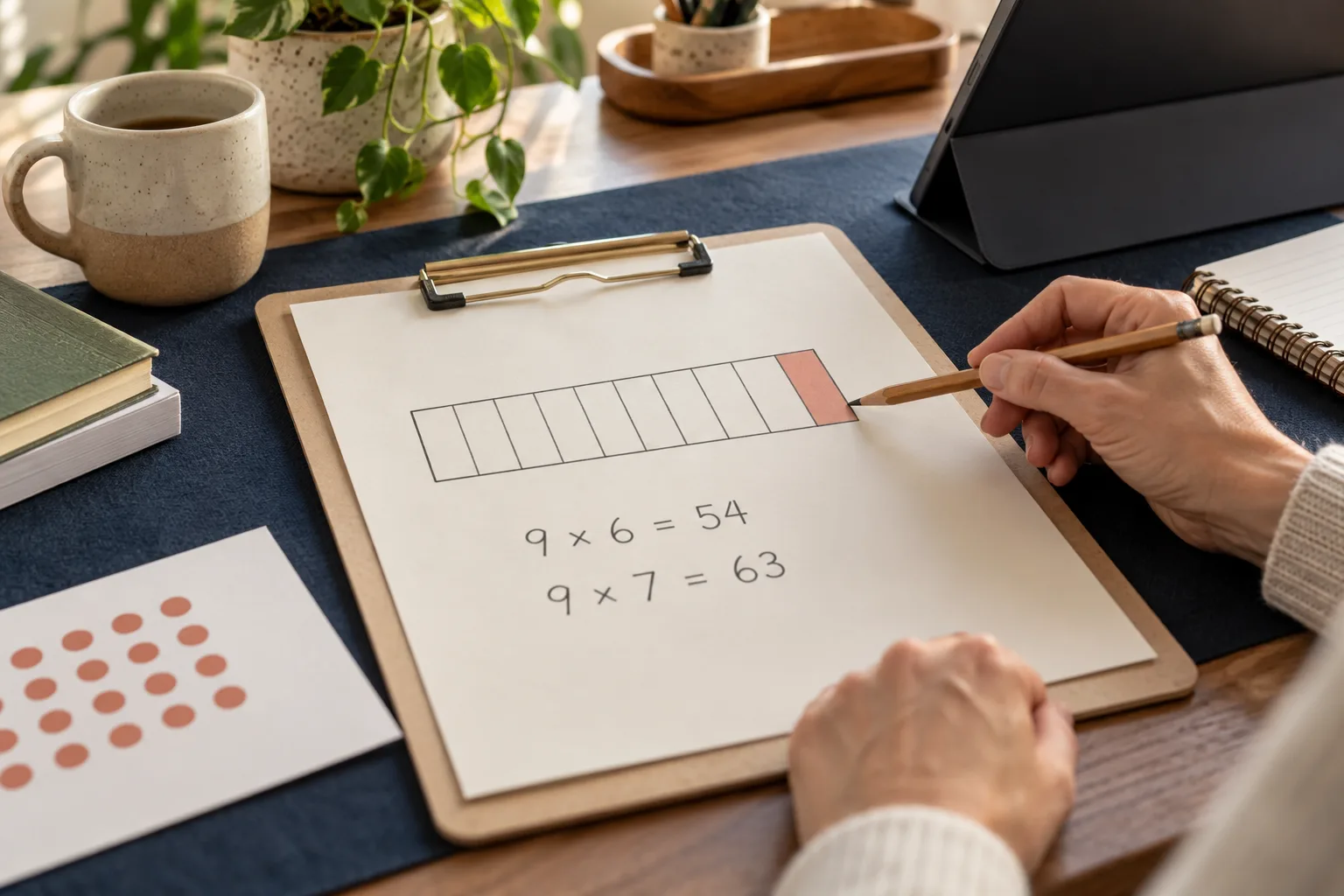
A child solving 9 × 6 as 60 − 1 has noticed a connection to ten but removed one object rather than one group. An array makes that specific distinction visible. The next lesson should address the group, not restart all multiplication.
Give a nearby example
After teaching, choose a similar problem with different numbers. Let the learner attempt it before prompting. This helps separate repeating your previous answer from using the new understanding.
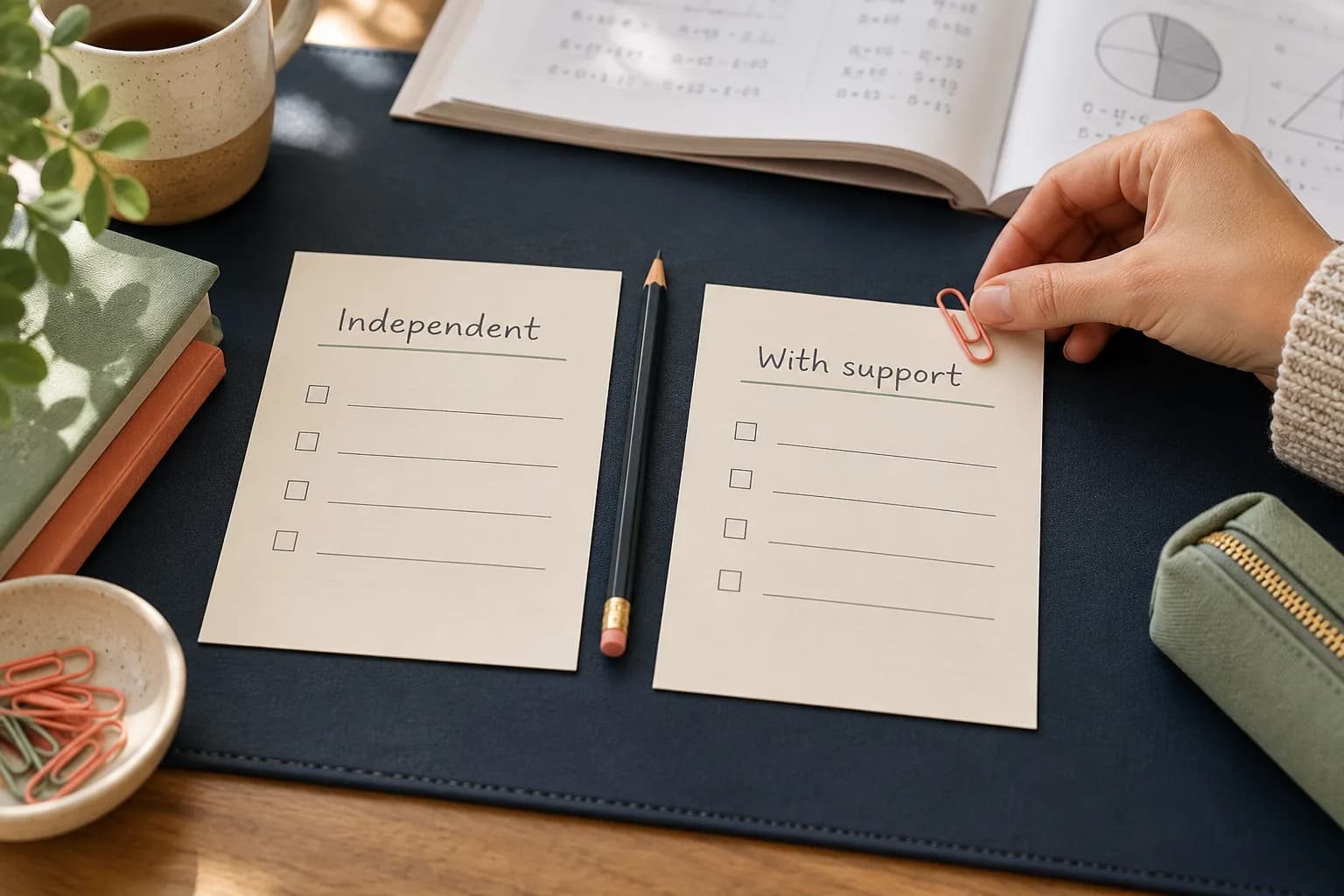
If they need help, provide it and note what helped. There is no value in withholding instruction merely to preserve a score. Keep the first independent response separate from the later supported success.
Plan a return
Write a short note: “Understands equal groups; needs practice removing one whole group when using tens for nines.” Choose a brief reinforcement activity and a later recheck. Avoid labels such as “careless” when the evidence is a specific, teachable step.
In M.I.R.E.R., a pattern from practice can prompt an adult to take this closer look. The recommendation is a starting point for judgment. The adult can decide whether the best next move is a different model, a simpler prerequisite, a fresh explanation, or simply another opportunity after a rest.
Sources & further reading
Research background and Glow’s approach, alongside the original activity ideas in this guide.