Math fact fluency starts with understanding
Build math fact fluency with models, useful strategies, recall, and later checks instead of treating speed as the whole goal.

Connect a fact to a model and a strategy, then revisit it until accurate recall becomes easier.
When a child answers 6 + 7 quickly, it is useful to know how they got there. They may recall the fact, use a known double, or count efficiently. Fluency grows from a connected set of skills: understanding the operation, choosing a workable strategy, answering accurately, and eventually recalling familiar facts readily.
You can plan practice that respects all of those parts without turning every session into a long explanation or a race.
Give the fact a meaning
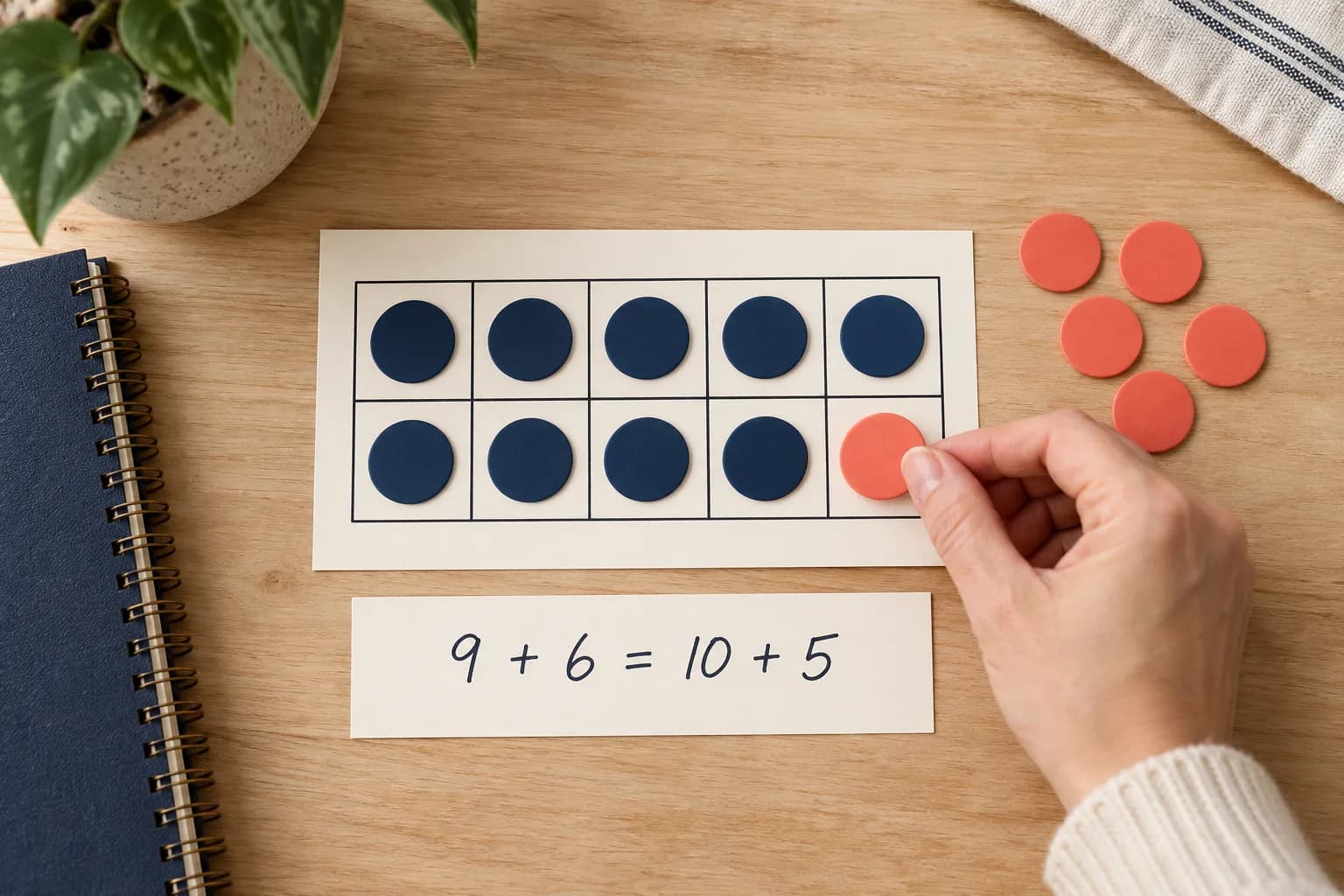
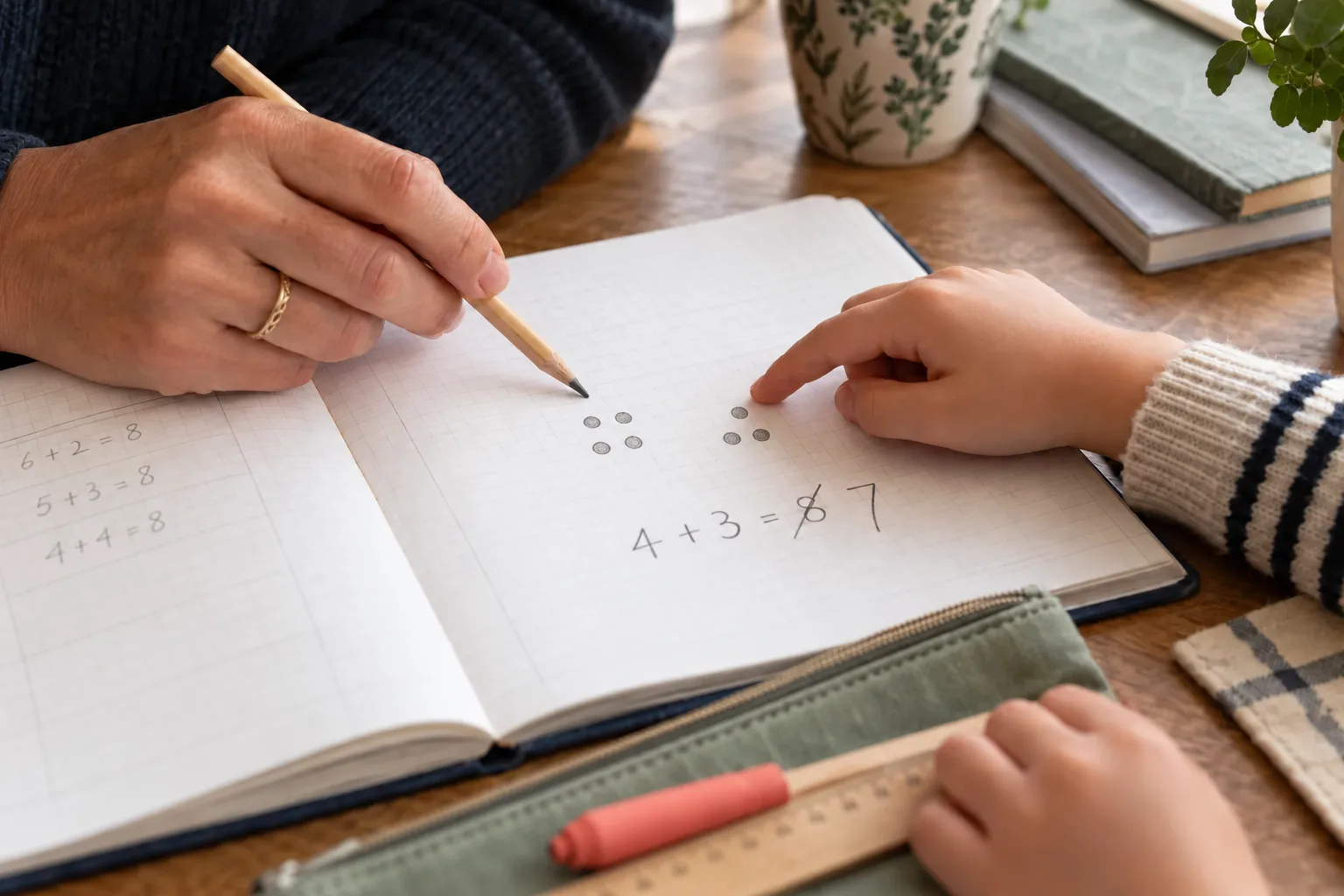
Build six objects and seven objects, or draw two groups. Ask the learner what the addition expression describes. Combine the groups and connect the result to the written equation.
Use manageable materials and a clear layout. If counting the objects itself is difficult, work on that before expecting fact recall. A model should make the structure easier to see, not add another confusing task.
Connect to something already known
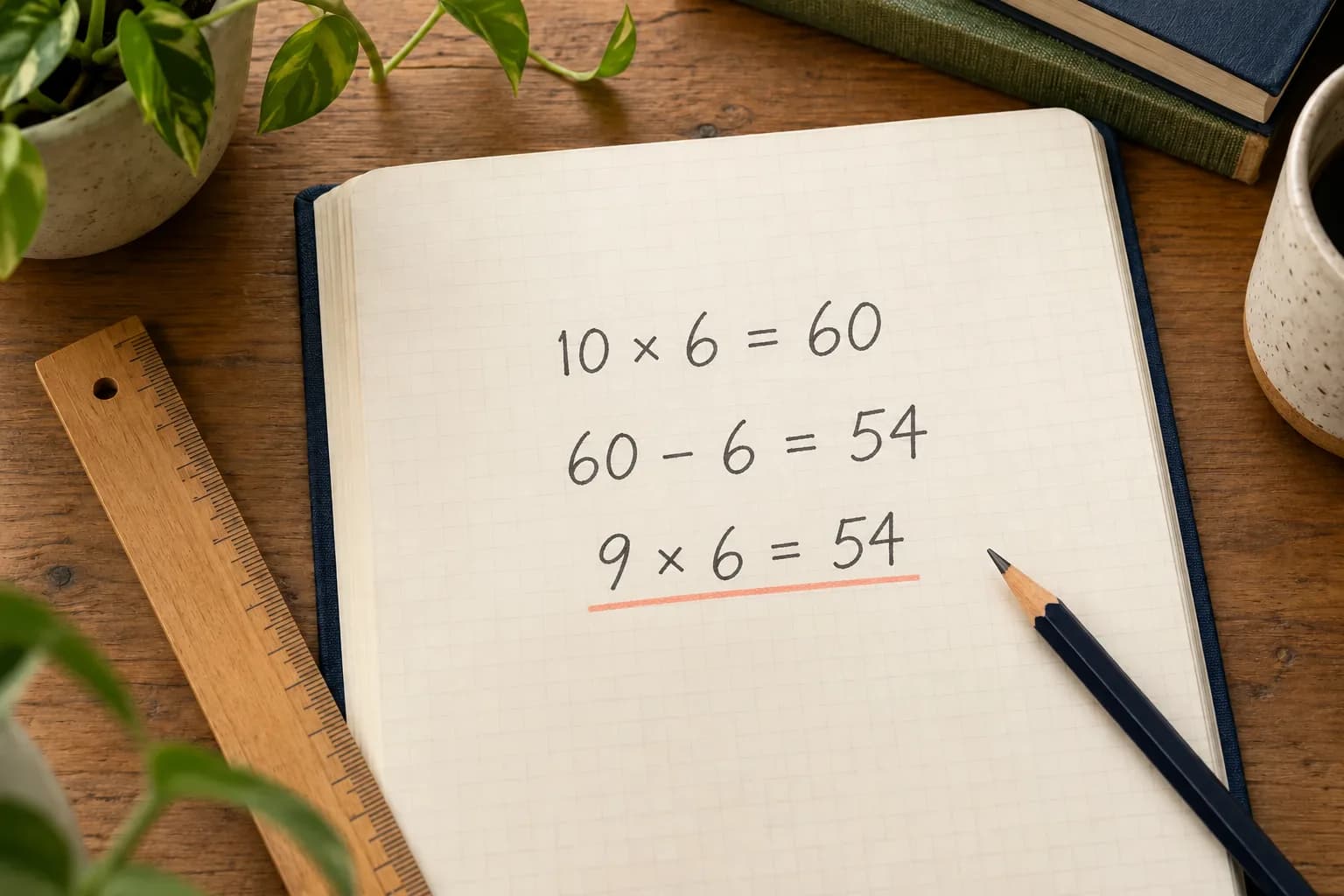
For 6 + 7, a child who knows 6 + 6 can reason that one more makes 13. Another might move four from seven to six, making 10 + 3. Explain one strategy clearly and invite the learner to show why it works.
Avoid teaching several tricks at once when the underlying relationship is new. A flexible learner can eventually compare strategies; a learner just starting may need a stable path they understand.
Make room for recall
Once the meaning and strategy are familiar, ask for a small number of answers without showing the model first. If the child is unsure, give time for a strategy. Then provide feedback or bring the model back.
Mix a few current facts with familiar ones. Return on another day rather than requiring a long block of identical repetitions. Glow's white paper places retrieval and spaced practice alongside visual cues for this reason: seeing a fact and recalling it are different jobs.
Check more than response time
Notice whether the answer is correct, whether a strategy is sensible, and how much help was needed. A slower correct explanation can be valuable evidence of learning. A fast incorrect answer points to a different next step.
If you use a timed activity, explain its purpose and keep it separate from teaching a new concept. Do not make speed the only way a child can show progress. For some sessions, the best finish is a learner explaining, “I knew six and six, so I added one more.” That connection gives the next round of practice something solid to build on.
Sources & further reading
Research background and Glow’s approach, alongside the original activity ideas in this guide.