Stuck on 9 × 6? Teach the nines through tens
Use arrays and a ten-groups-minus-one-group strategy to reinforce nine-times facts, including 9 × 6 and 9 × 7.
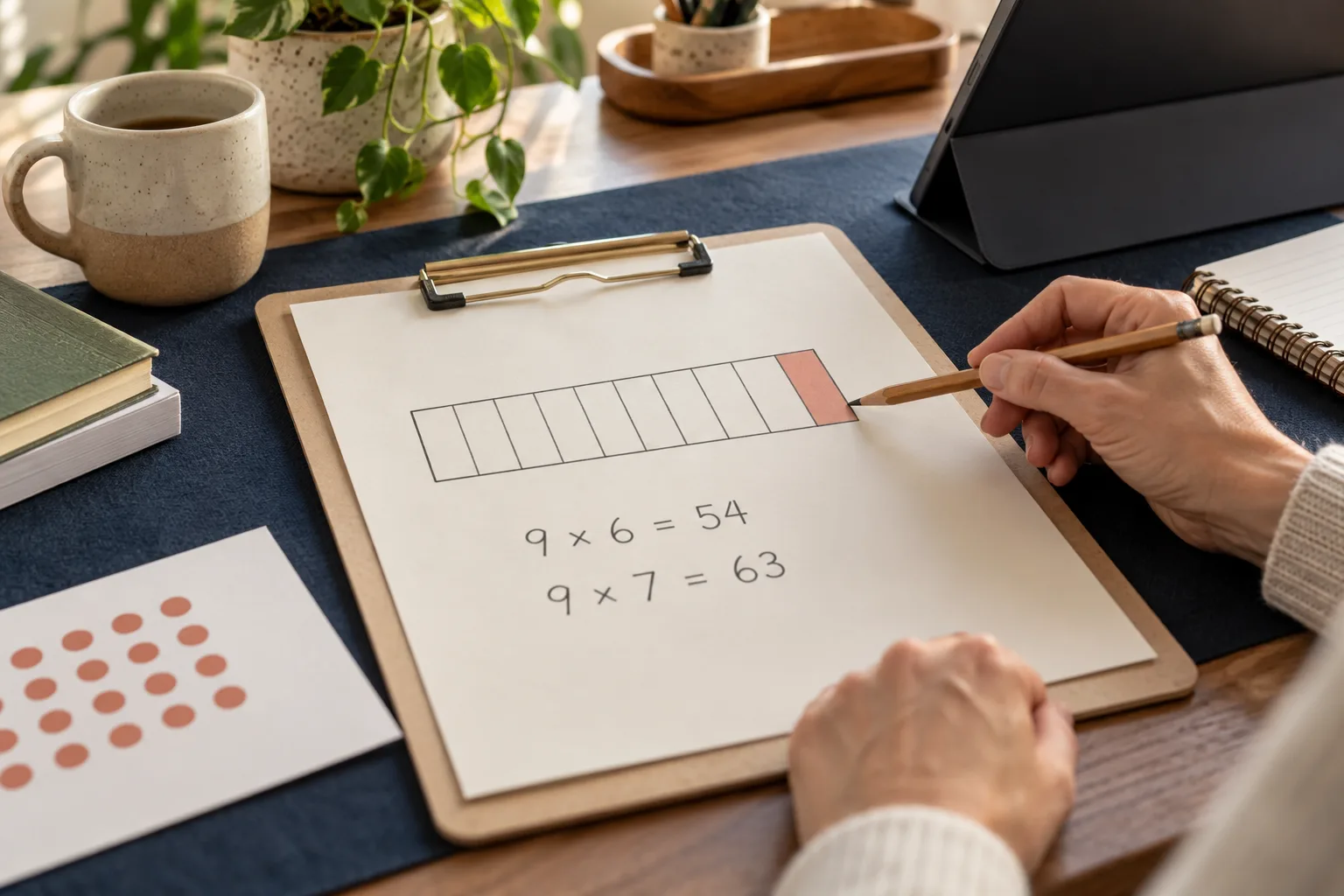
Build ten equal groups, remove one group, and connect that change to the nine-times fact.
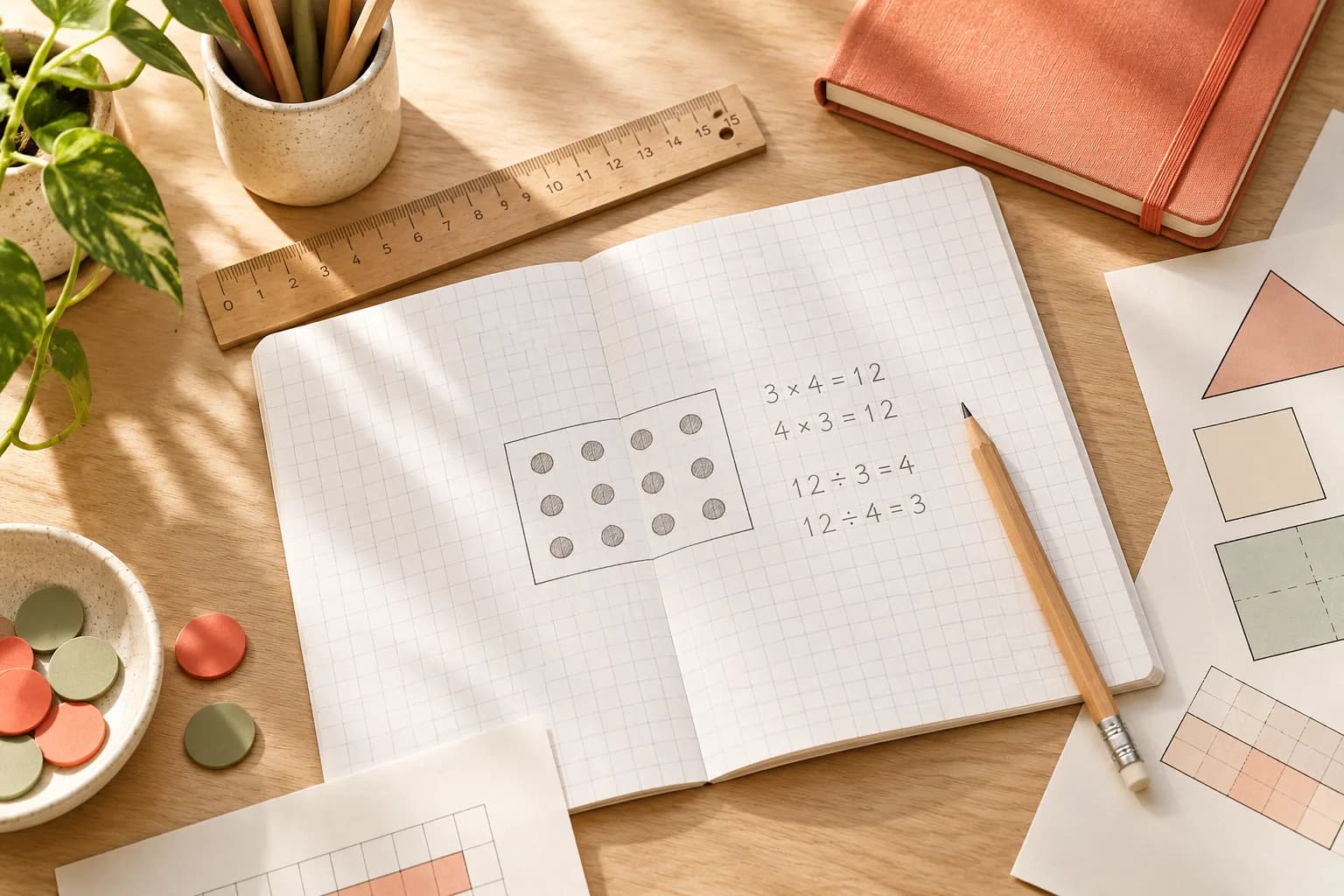
A learner who knows most multiplication facts may still hesitate at 9 × 6 and 9 × 7. That does not require restarting an entire table. A focused lesson can connect those facts to a familiar relationship: ten equal groups are one group more than nine equal groups.
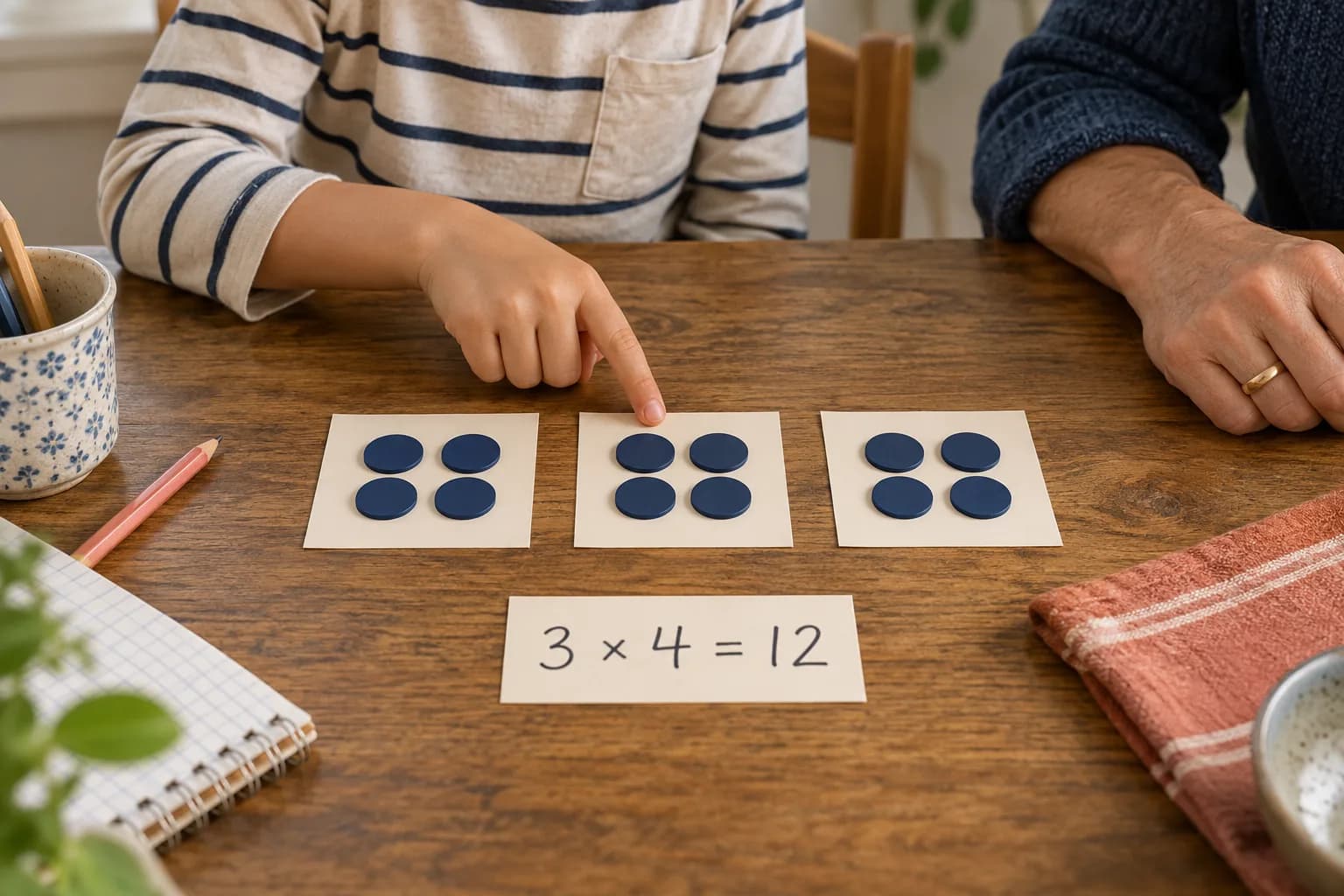
Before using the strategy, check that the child understands equal groups and can find ten groups of the chosen number. The explanation is useful only if its pieces make sense.
Build the relationship
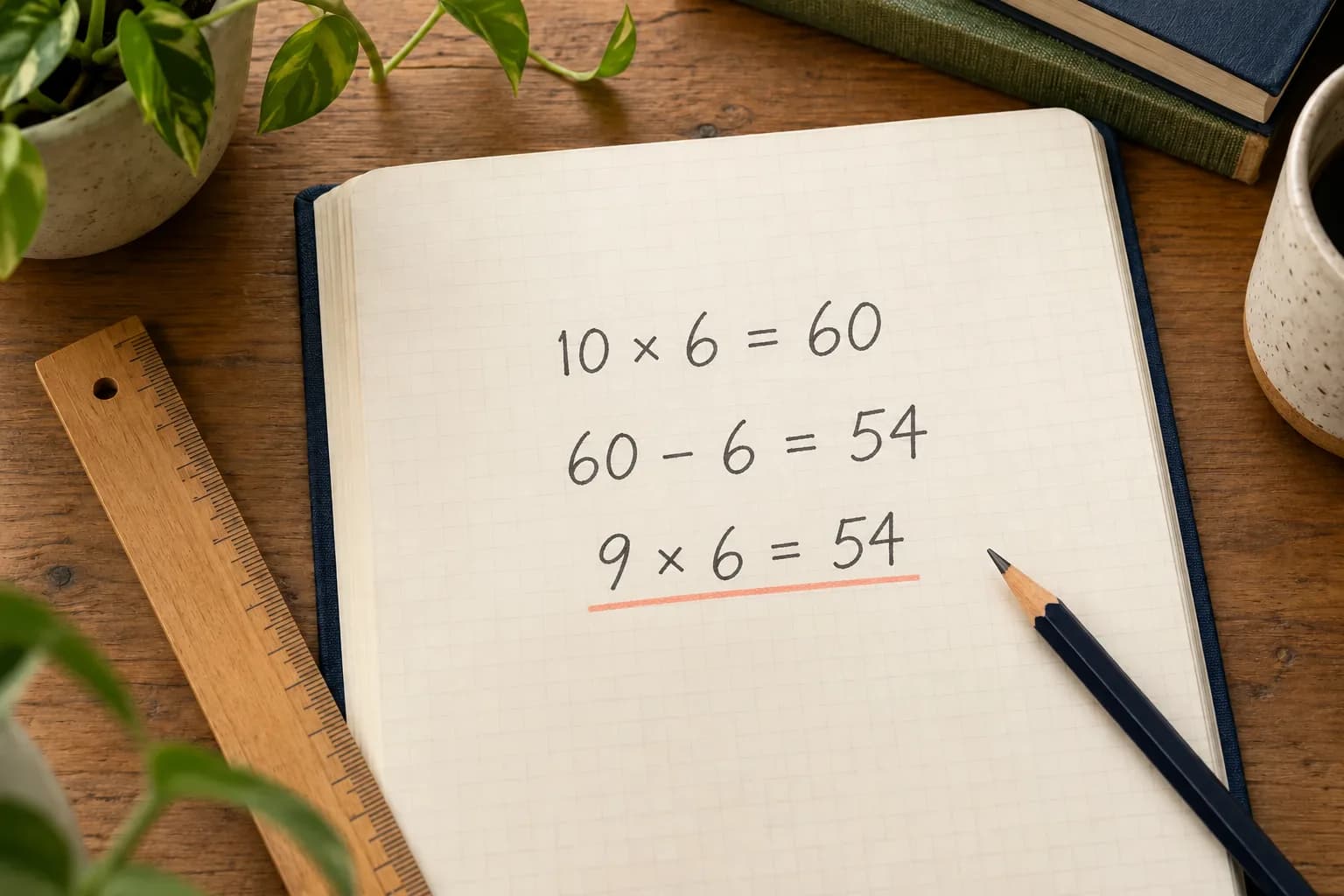
Draw ten rows with six dots in each row. Agree that, for this drawing, 10 × 6 describes ten groups of six. Count or reason that there are 60 dots.
Cover one complete row. Ask what remains: nine rows of six. Removing one group removes six dots, so 60 − 6 = 54. Write 9 × 6 = 54 beside the drawing and connect each number to what the child can see.
Try the second fact with a fresh model
Use ten rows of seven. Find the total of 70, then remove one group of seven to get 63. Let the learner explain why 9 × 7 is 63. If they subtract one rather than seven, return to the meaning of a whole group.
Keep the two facts separate long enough to hear the explanation. Saying “use the nines trick” is less informative than asking, “What group did you remove?”
Move from drawing to mental strategy
After working with the arrays, show 9 × 6 without the drawing. Invite a first response. If the learner needs support, ask what ten groups would be, then what should be removed. Record that as a supported answer, not independent recall.
Try a related example the child has not just copied, such as 9 × 4. Ask them to describe the relationship before you introduce another method. A fresh example helps you see whether the strategy travels beyond the two practiced facts.
Return later with a small check
On a later day, mix 9 × 6 and 9 × 7 among a few familiar facts. Begin without the model, then offer it if needed. Include a short equal-groups story so that the multiplication still has meaning.
This is a useful M.I.R.E.R. pattern: notice a specific cluster, inform the adult, reinforce with a model, check independently, and revisit. Celebrate the learner's growing control of the strategy. The reward can be the very concrete observation that they now know how to recover an answer they once had to guess.
Sources & further reading
Research background and Glow’s approach, alongside the original activity ideas in this guide.