Teach equal groups before multiplication facts
Introduce multiplication through equal groups, arrays, and stories so children understand what a fact represents before practicing recall.
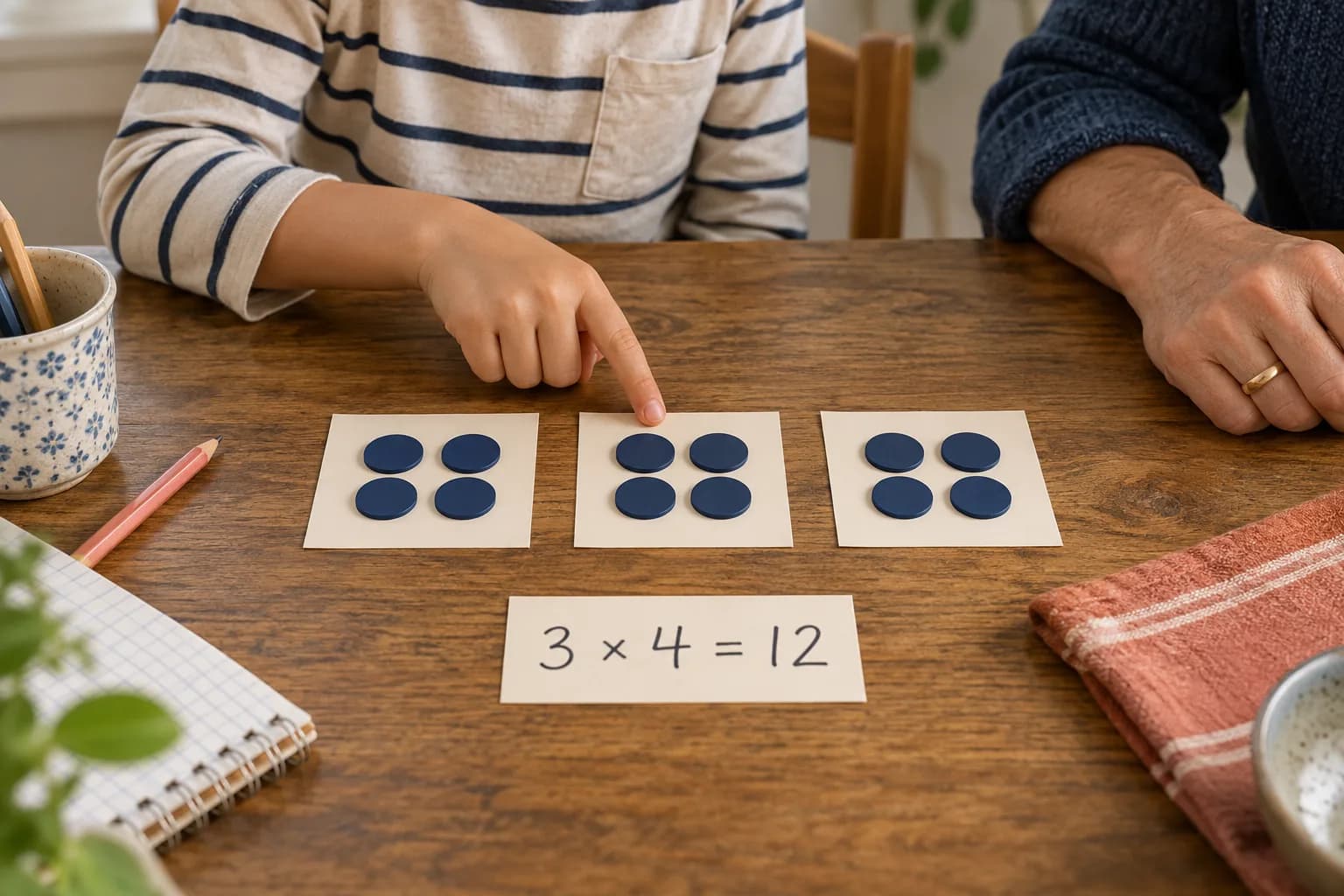
Check that every group has the same amount, then connect the groups to a multiplication expression.
Three plates with four crackers on each plate provide a useful beginning for multiplication. The learner can see the number of groups, the amount in each group, and the total. If those roles are clear, the written expression has something meaningful to describe.
Start with small groups that are easy to inspect. Use counters rather than food if allergies, sharing rules, or distractions would complicate the activity.
Check the word equal
Build three groups with four objects in each. Ask what makes the groups equal. Then quietly move one object from one group to another and ask whether the groups are still equal.
The total remains twelve, but the grouping has changed. This contrast helps separate “same total” from “equal groups,” a distinction that matters when children begin writing multiplication expressions.
Name the quantities
For this activity, agree to read 3 × 4 as three groups of four. Point to the three groups and then to the four objects within one group. Connect 4 + 4 + 4 with the total of twelve.
Different classrooms may use a different convention when describing the factors. Keep your language consistent with the child's instruction and explain what each factor represents in the model. The story and diagram should remove ambiguity.
Rearrange into an array
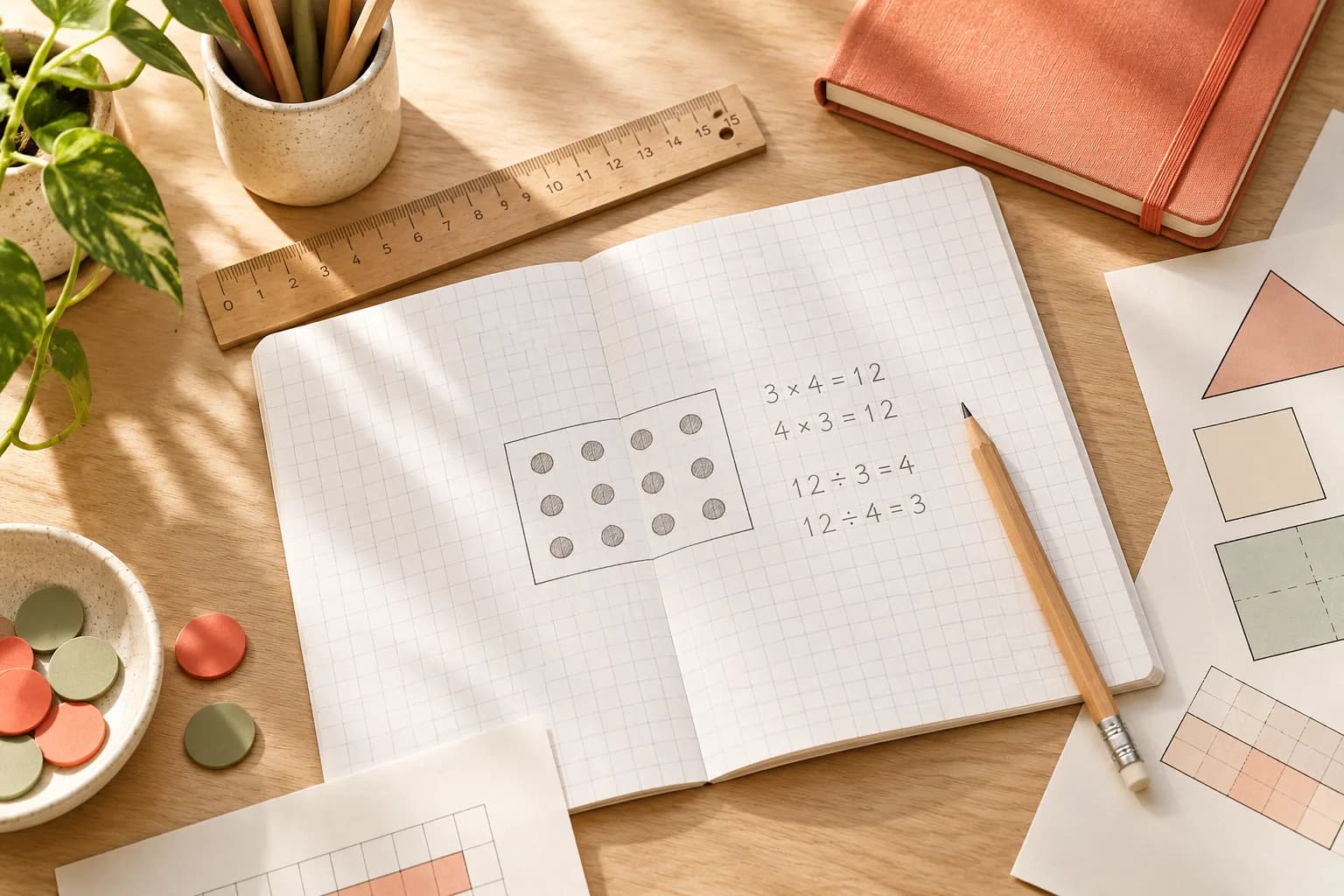
Place the twelve objects in three rows of four. Ask the child to show the rows and count how many are in each. Rotate the array and discuss what changed and what stayed the same.
This provides a concrete way to explore 3 × 4 and 4 × 3. Their products match, while the number and size of groups in a particular story can still have different roles. Let the learner describe that difference in ordinary language.
Give the learner a new story
Try four bags with two pencils in each. Ask the child to build or draw it, write an expression, and explain the total. Include an example with unequal groups and ask whether the same multiplication description fits.
When these representations make sense, use short fact-practice sessions to build familiarity. Return to a model when an error suggests the grouping itself is unclear. Multiplication practice becomes more useful when the learner has a way to reconstruct an answer and explain why it belongs to the situation.
Sources & further reading
Research background and Glow’s approach, alongside the original activity ideas in this guide.