Skip counting that connects to multiplication
Turn counting by twos, fives, and tens into meaningful work with equal groups, number lines, and missing-number questions.
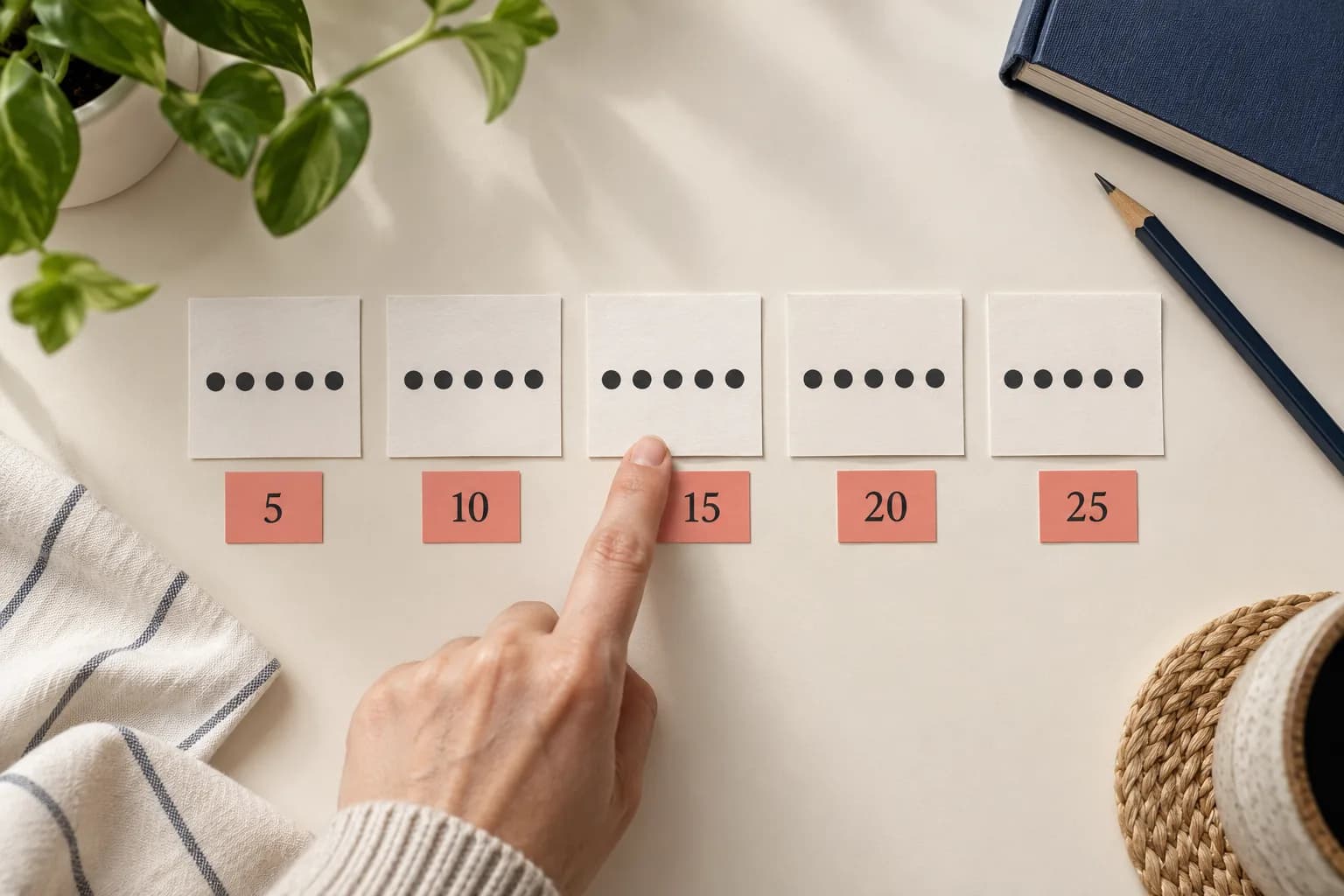
Connect each spoken number to an equal group or jump so the sequence represents a growing quantity.
Reciting “two, four, six, eight” can sound fluent even when a child cannot use the sequence to find a total. Make the counting visible. Each number should correspond to another equal group, another equal jump, or another repeated amount.
Start with a sequence the learner is ready to explore. Twos, fives, and tens offer different structures; choose one and give it meaning before mixing them.
Count real groups
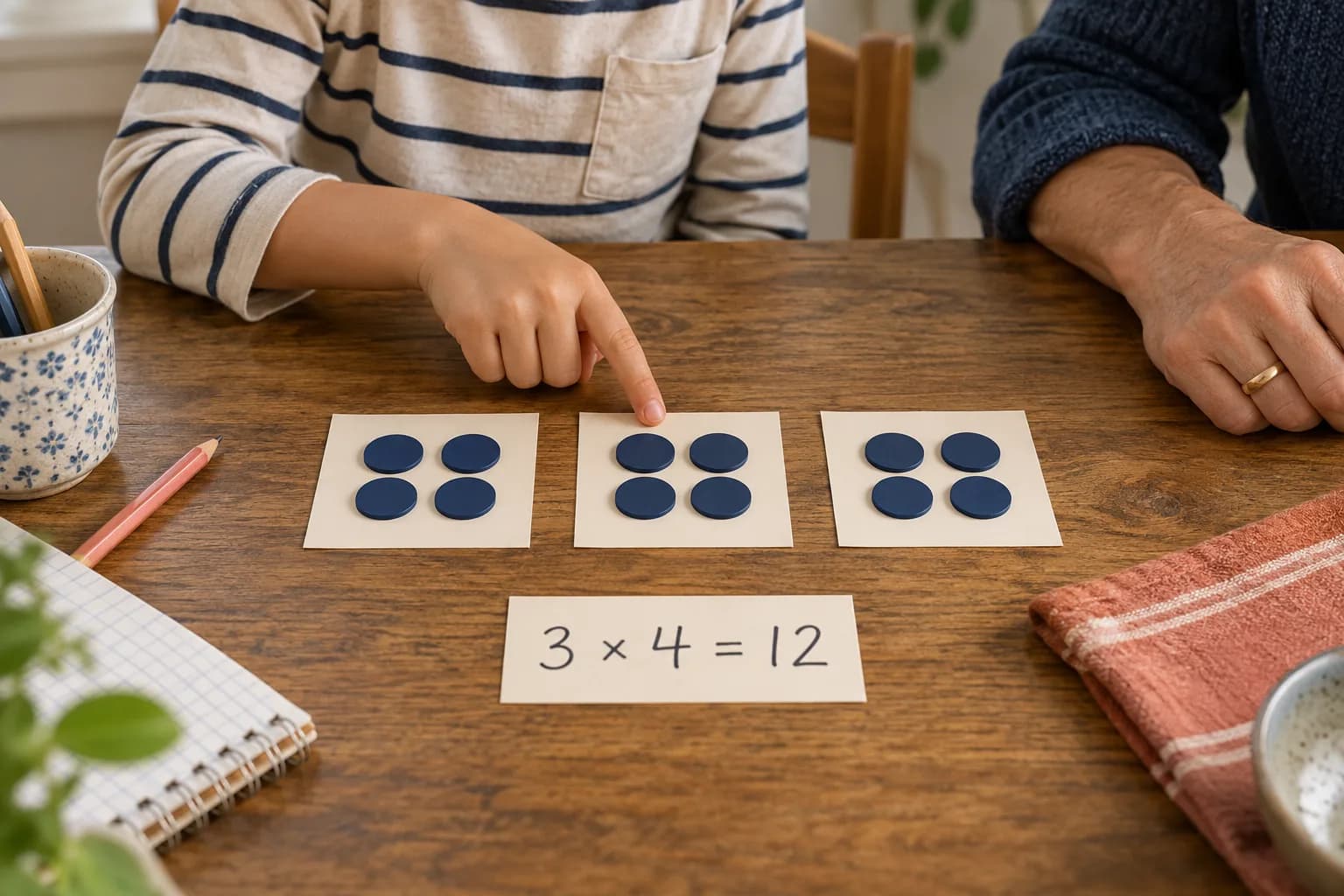
Arrange four pairs of counters. Touch one pair at a time while saying two, four, six, eight. Ask how many groups there are, how many are in each group, and how many counters there are altogether.
If the learner loses track, slow down and move each counted pair into a separate area. The goal is coordinating the spoken sequence with the groups, not reciting as quickly as possible.
Show the same pattern on a line
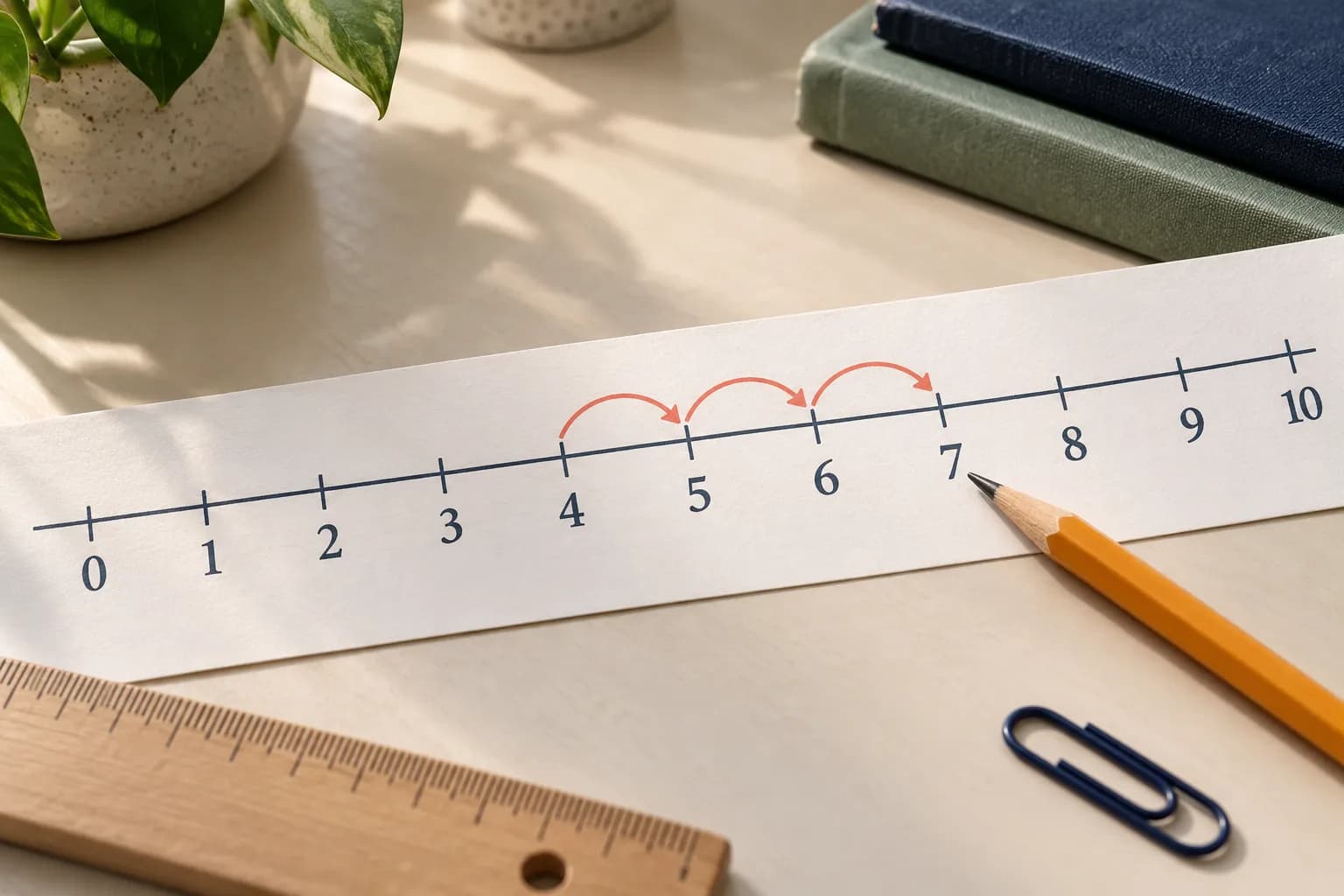
On a clearly marked number line, start at zero and make four jumps of two. Label the landing points. Compare them with the totals you said while touching the pairs.
Ask what the fourth jump means. If the child answers “four counters,” return to the model: four jumps of two have added eight. This is a useful place to distinguish the number of jumps from the amount added by each jump.
Ask a missing-step question
Show two, four, a blank, and eight. Invite the learner to rebuild the groups or trace the jumps to find the missing six. Then ask what comes before a familiar point, not only what comes after it.
For a learner ready for more, start at a nonzero point: count by twos from three. Explain that the step size is still two, even though the sequence now contains odd numbers. Choose this extension only after the initial relationship is secure.
Connect to multiplication when ready
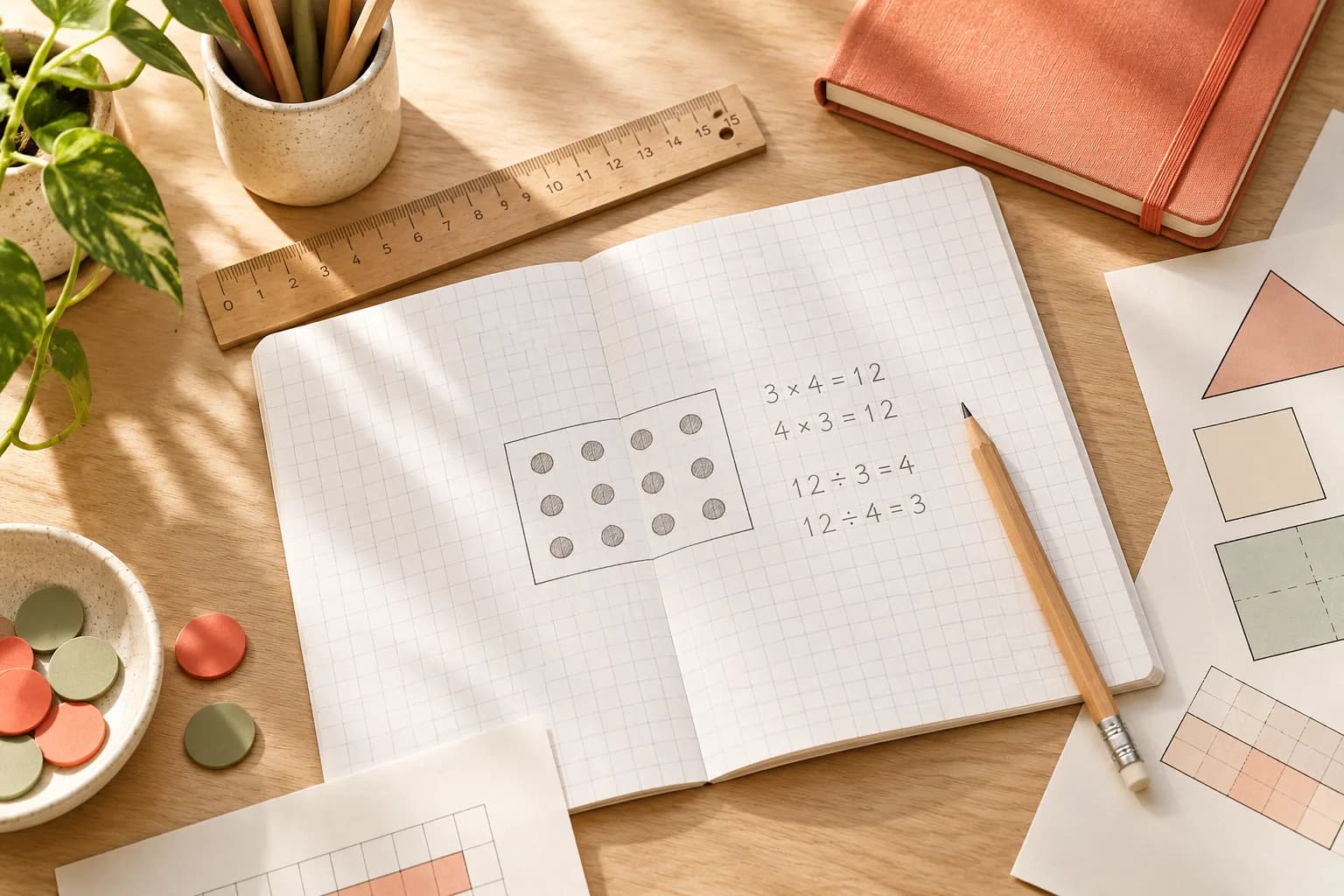
Use five groups of two and write 5 × 2 = 10, explaining your factor convention. Ask the child to show the five groups and the two in each. Then compare a different grouping that has the same total.
Later, present a small story with equal groups and let the learner decide whether skip counting helps. A child who can chant a sequence but cannot apply it needs more connection to quantities, not necessarily a longer counting song. The useful outcome is being able to explain what the numbers in the sequence stand for.
Sources & further reading
Research background and Glow’s approach, alongside the original activity ideas in this guide.