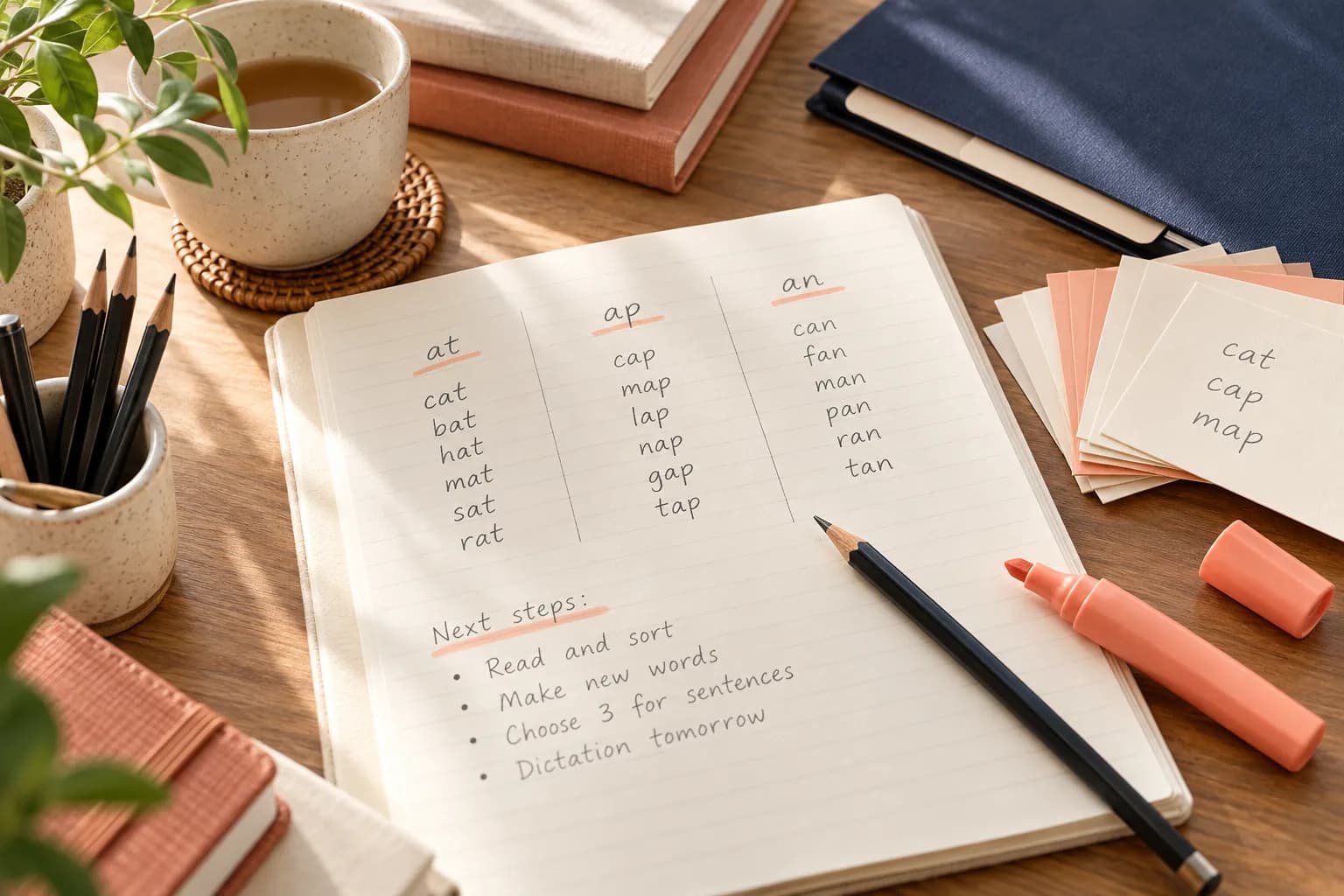
Phonemic awareness and phonics: two connected skills
Learn the difference between hearing sounds in spoken words and connecting those sounds to letters, with a simple home or classroom activity.
Listen to sounds, connect them to print, and choose the next task from what the learner can actually do.
The terms sound similar, but they describe different parts of learning to read. Phonemic awareness involves noticing and working with individual sounds in spoken words. Phonics connects sounds with written letters and letter groups. A child can need support with either part, or with bringing the two together.
You do not need a large collection of materials to notice the difference. Start with a few familiar spoken words and a small set of letters the child has been taught.
Listen before showing the letters
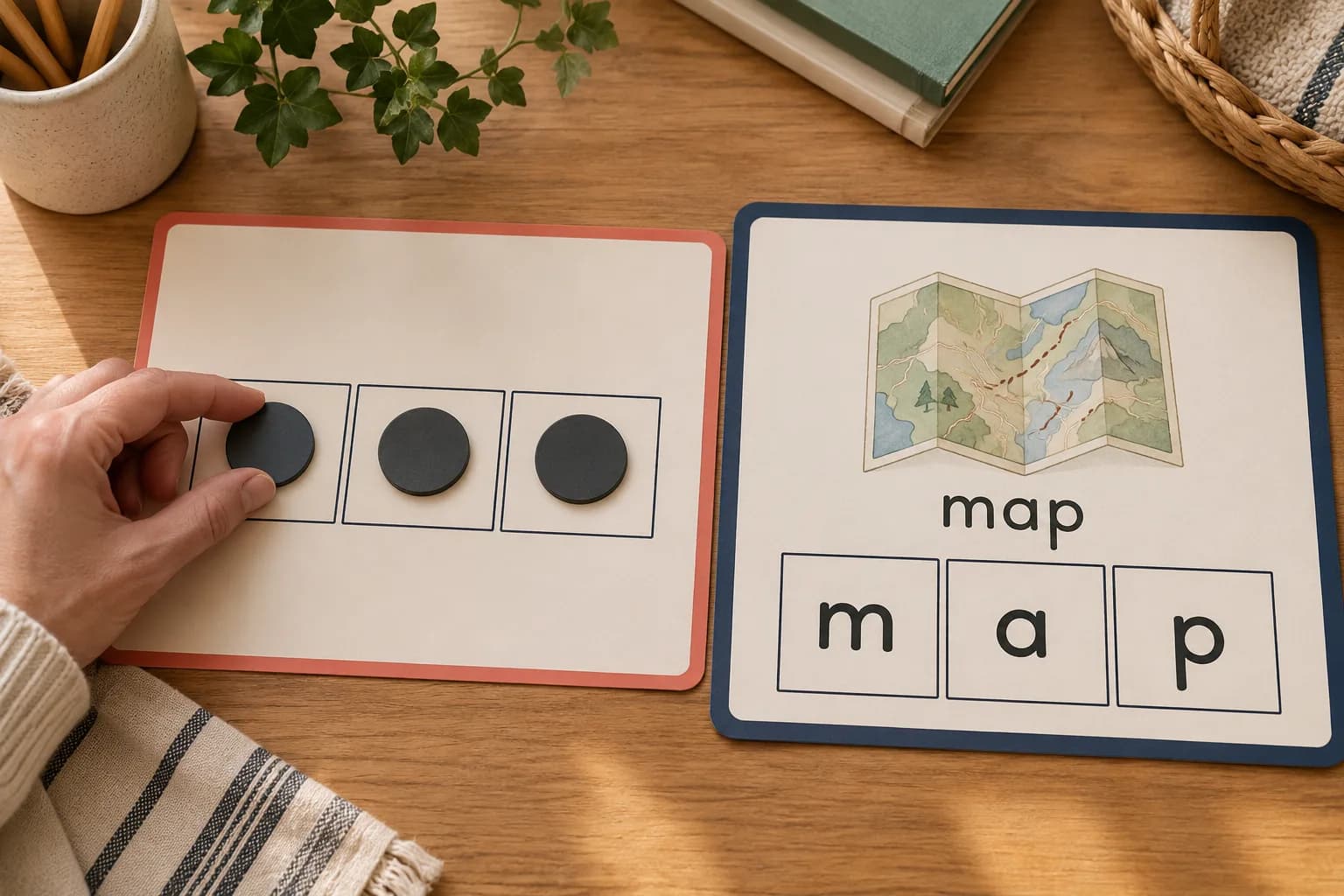
Say “map” naturally. Ask the child to repeat it, then help them hear /m/, /a/, and /p/. Slide one counter for each sound. The counters stand for sounds here; they do not stand for syllables or individual letter names.
If the child has trouble, model the task with another familiar word and try again. Keep the spoken sounds clear. Adding an extra “uh” after consonants can make blending harder, so aim for a short, clean sound when possible.
Connect the sounds to print
Show m, a, and p. Place each letter beside its sound counter, then slide the counters away. Blend the sounds while attending to the letters. Ask the child to read “map,” and use it in a sentence.
Now change m to t, if those sounds and the short-a pattern are familiar. Read “tap.” Discuss what changed and what stayed the same. The letters are doing meaningful work; they are not just labels on a listening game.
Remember that letters and sounds do not always match one for one
When the learner is ready for “ship,” the sh letters together represent one sound. A sound-box activity would use three boxes for /sh/, /i/, and /p/, with sh sharing the first box. Introduce this when the spelling is part of the child's instruction.
That distinction helps adults avoid an easy mistake: demanding one box per letter in every word. Decide whether your activity is counting sounds, naming letters, or reading a spelling pattern, and explain that purpose.
Choose the next small step
If a child can separate a spoken word into sounds but cannot choose the matching letters, focus on the letter-sound connections. If they know individual letter sounds but cannot blend them into a word, model blending and use short, familiar examples.
Keep the activity brief enough to remain clear, then read a word or sentence with meaning. Note the exact point where help was needed. That observation is much more useful for planning than treating all early-reading difficulty as one problem.
Sources & further reading
Research background and Glow’s approach, alongside the original activity ideas in this guide.