What to do when a child guesses words while reading
Respond to first-letter guesses and picture-based guesses with clear, supportive routines that bring attention back to the whole word.

Use the printed word as the evidence, offer a clear model when needed, and let the child reread for meaning.
A child sees a picture of a rabbit and reads “rabbit,” although the sentence says “bunny.” The guess makes sense in the story, but it does not match the print. This is a useful teaching moment: you can acknowledge the meaning while helping the learner attend to the actual word.
Try saying, “That would make sense in the picture. Let's look at the letters in this word.” Keep the interaction calm. The child needs a workable strategy, not a warning to try harder.
Work out why the guess happened
Was the word built from spelling patterns the child has learned? Was the text too difficult for independent reading? Did the learner rush past the ending? Did an adult previously encourage guessing from illustrations?
Listen to a small sample before deciding. If nearly every sentence contains untaught spellings, change the text or read it together. A decoding strategy cannot supply phonics knowledge that has not yet been taught.
Return to the complete spelling
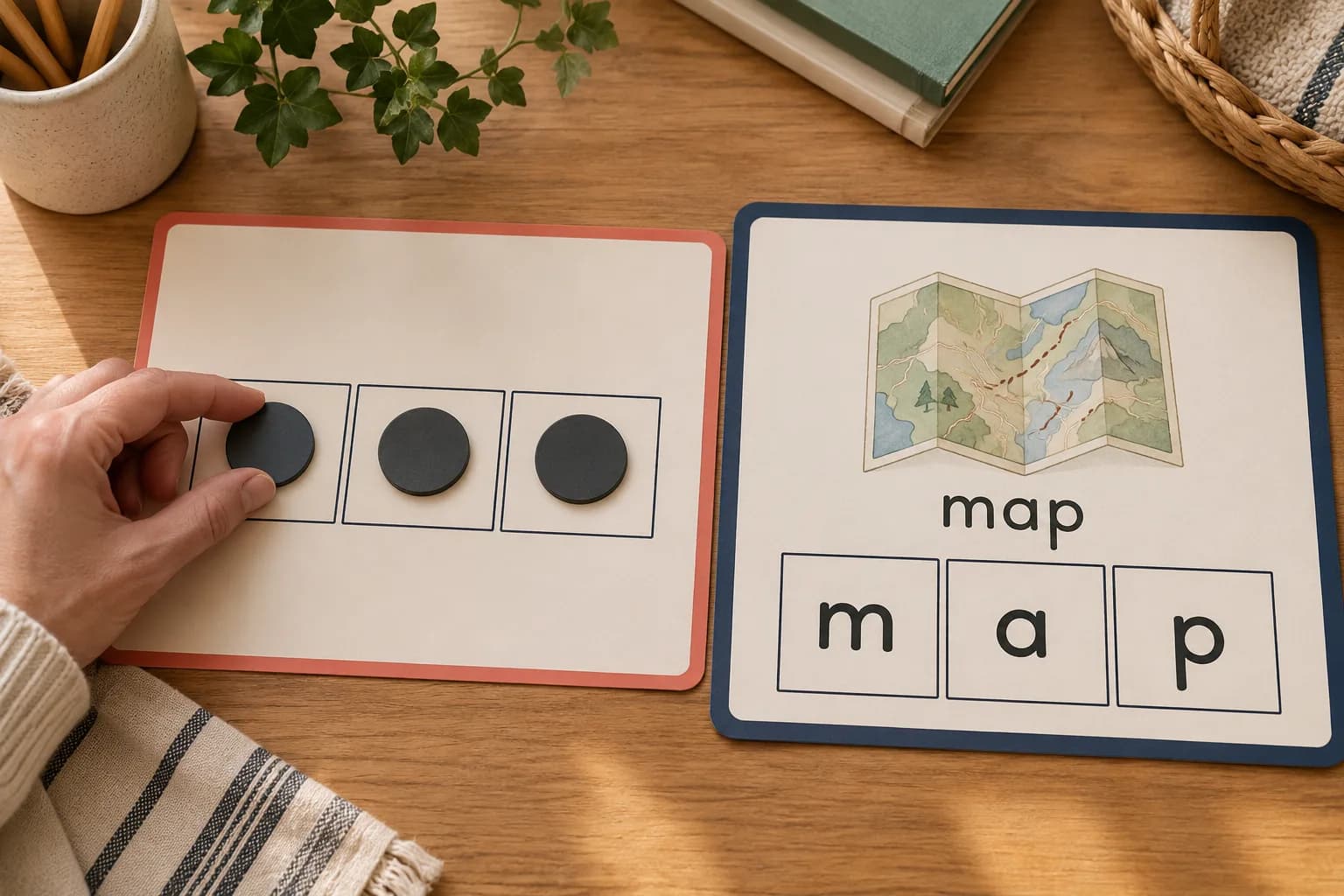
For a word the child can decode, point to the beginning and guide attention through the whole word. Ask them to connect the letters or letter groups to sounds, blend, and read again. Avoid repeated “What else could it be?” prompts that turn the moment into a guessing game.
If the word contains an unfamiliar part, teach that part or provide the word. Then have the child reread the sentence. Supplying an untaught word can protect the flow of a shared reading activity without pretending the child read it independently.
Try a short contrast activity
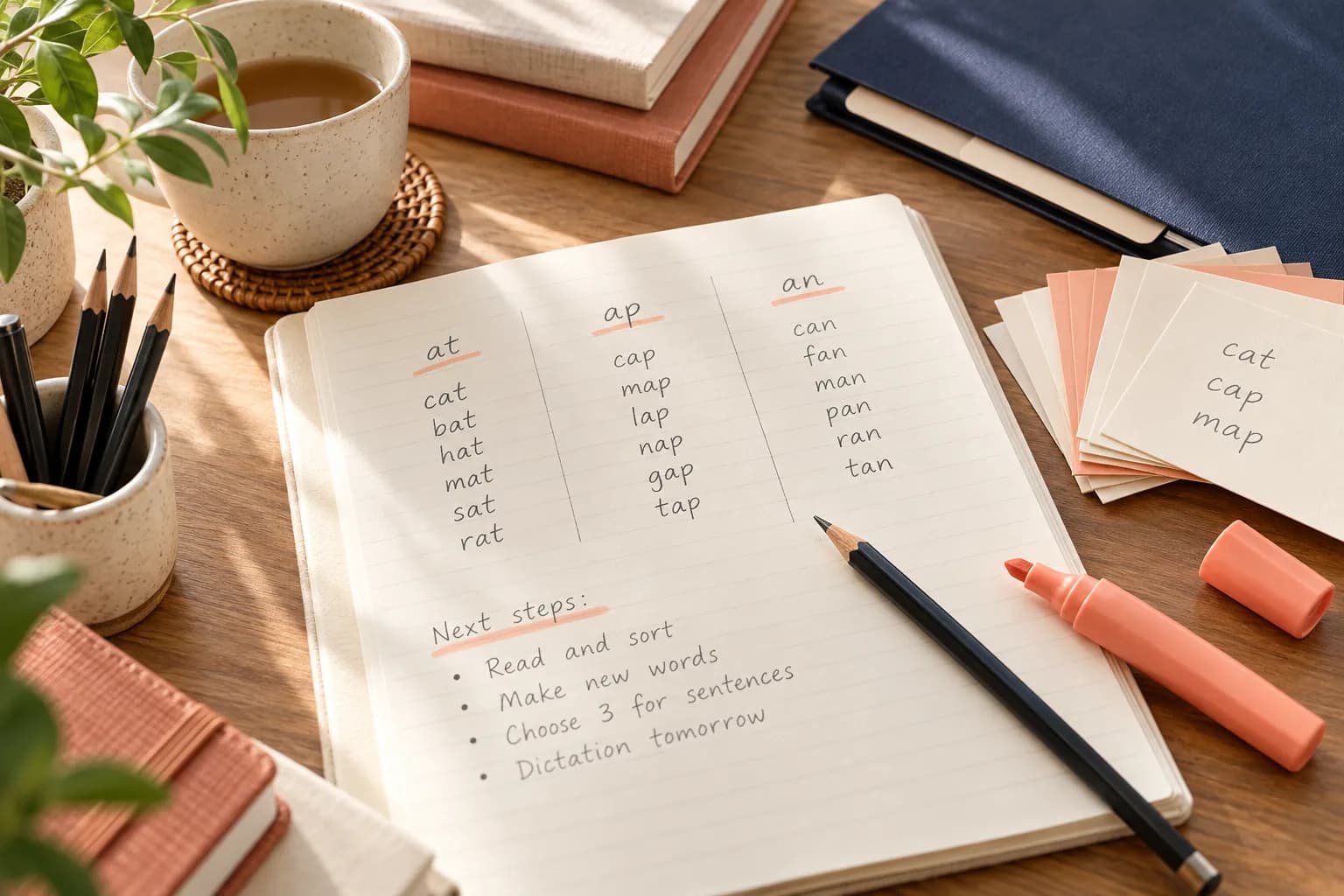
Write “cap” and “cat” on separate cards after both patterns have been taught. Ask the learner to read each and explain what changed. Then use each word in a sentence. Keep the cards in the same plain style so that letter differences carry the information.
For a child who skips endings, contrast a familiar singular and plural, such as “cat” and “cats.” Point out how the added letter changes both pronunciation and meaning. Choose examples that match the child's current instruction.
Check the next encounter
On another day, include the word in a fresh sentence without the earlier picture. Notice whether the child attends to the complete spelling. A successful reread immediately after your model is encouraging; the later encounter tells you more about independence.
If guessing remains frequent despite appropriate instruction and accessible text, share specific examples with the child's teacher or reading specialist. “Reads the first sound, then substitutes a different word” gives them a more useful starting point than “doesn't concentrate.”
Sources & further reading
Research background and Glow’s approach, alongside the original activity ideas in this guide.