Scaffolding lessons without doing the thinking for the child
Use models, prompts, and smaller steps to support learning while preserving space for children to explain and attempt the work themselves.

Offer enough support to make the next step possible, then create a fresh opportunity for the learner to do that step.
Scaffolding means providing support that makes a learning task more manageable. In practice, it might be a worked example, a number line, a sentence read aloud, or a prompt that helps a child find a starting point. The useful question is whether the support helps the learner participate in the thinking.
If the adult completes every step and the child repeats the final answer, the activity may look smooth while revealing little about what the learner can do next.
Find the difficult step
Watch one example closely. Is the child unsure what the directions mean, unable to recall a prerequisite, or struggling to organize a multi-step task? Each difficulty suggests a different kind of help.
For a math problem with complex wording, reading the directions aloud may remove an unrelated reading demand. For a reading task, explaining every target word in advance may remove the very work you intended the child to practice. Match the support to the goal.
Model the thinking clearly
Demonstrate one example and describe a useful decision. “Eight needs two more to make ten, so I will move two from this group of five.” Keep the explanation focused and connect it to what the child can see.
Then complete a similar example together. Ask the learner to choose a step or explain the move. This makes the joint work more informative than asking only, “Do you understand?”
Offer a prompt with a purpose
A prompt can direct attention without giving the answer. “How many spaces are empty?” may help a learner use a ten-frame. “Which letters represent the first sound?” may help a reader attend to a spelling.
If the prompt does not help, provide a clearer model or reduce the task. Do not repeat the same vague question with increasing urgency. A child who needs teaching benefits more from an explanation than from an extended guessing game.
Plan the next independent opportunity
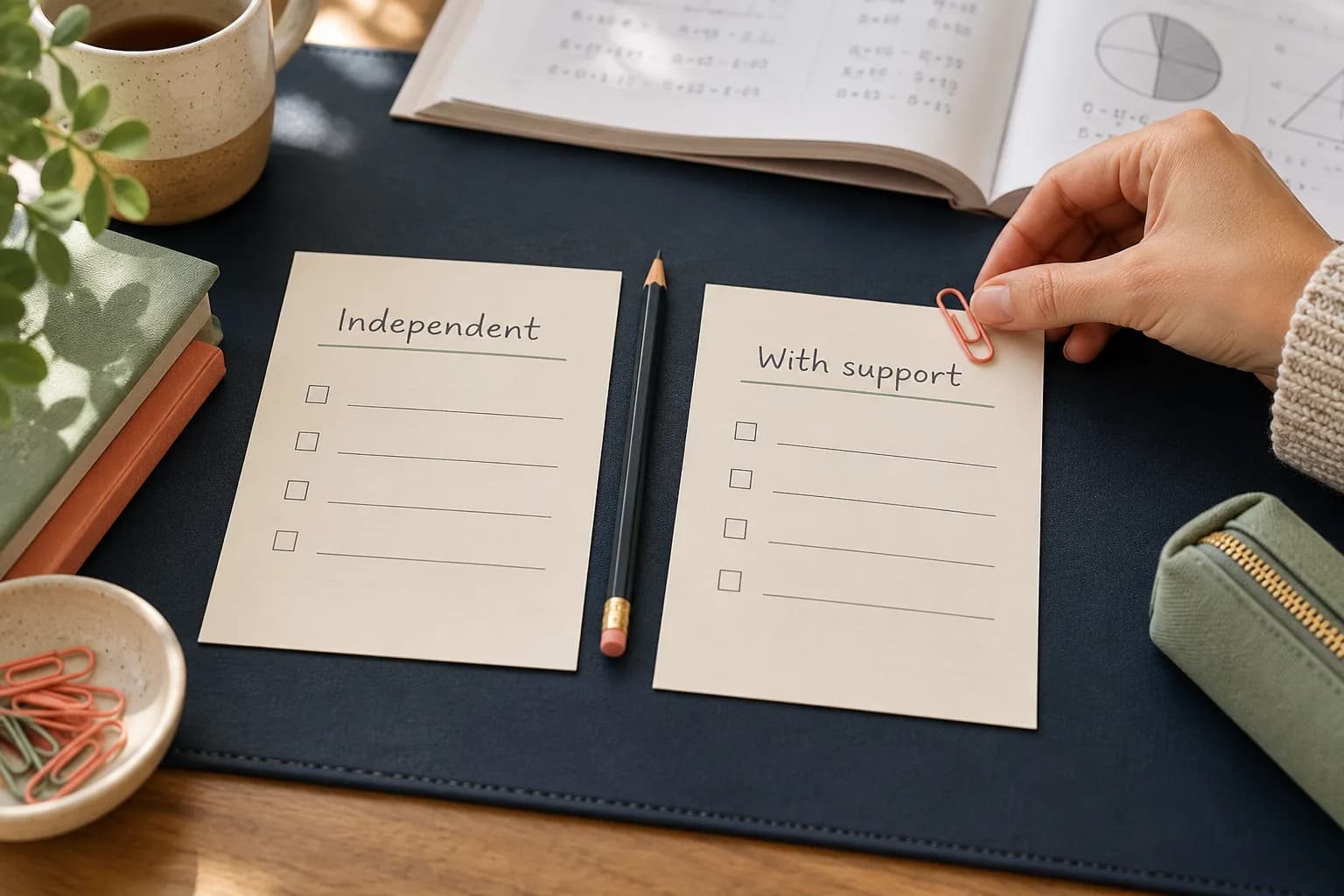
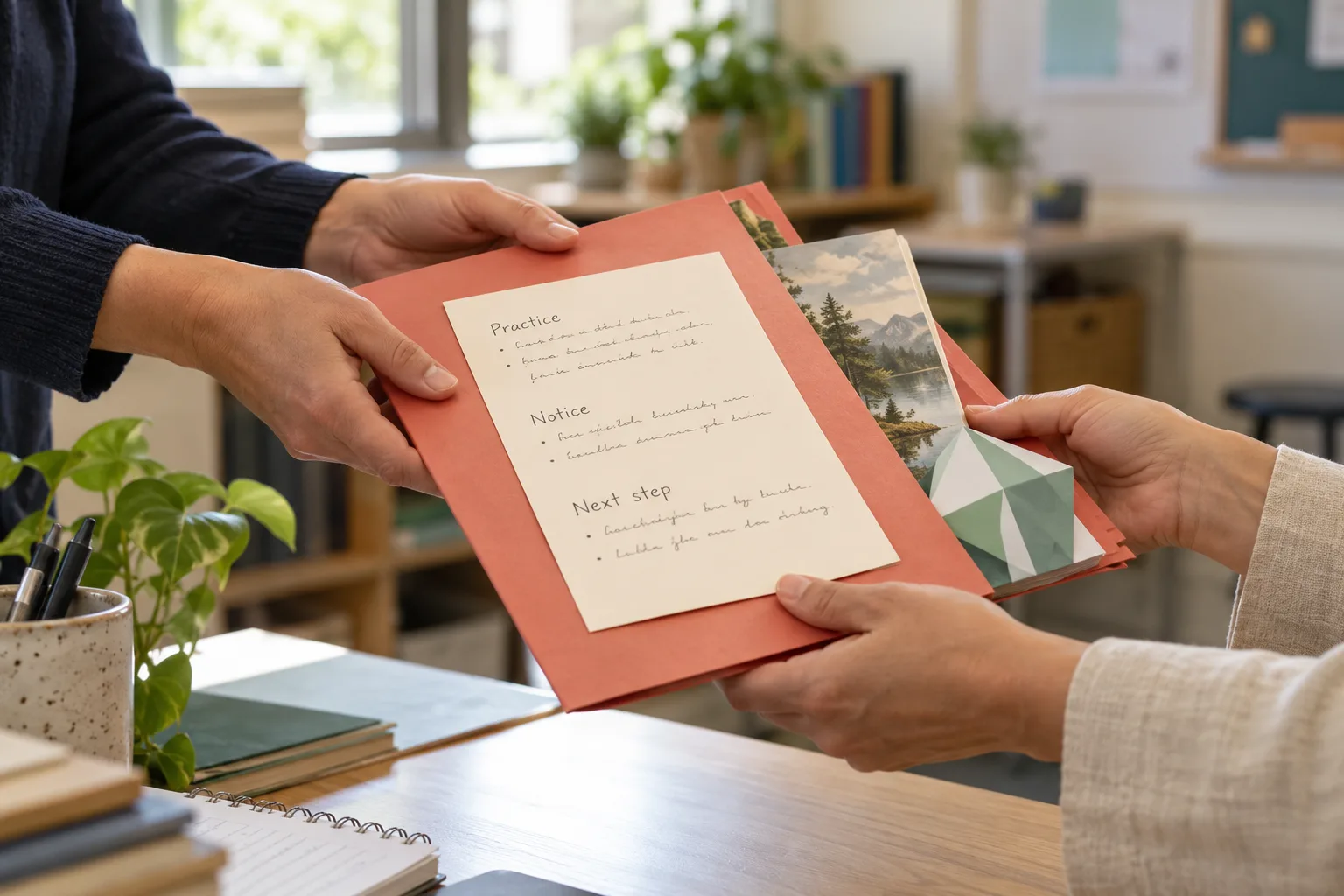
After supported practice, offer a comparable fresh example before helping. Record what the learner does and which support they request or use. Bring assistance back when it is useful.
In a pacing guide, leave room for this cycle. Moving forward can mean a smaller prompt or a new context, not only a harder lesson. M.I.R.E.R. applies the same practical idea: choose support for a specific need, observe the next response, and use that evidence to decide whether to continue, adjust, or revisit.
Sources & further reading
Research background and Glow’s approach, alongside the original activity ideas in this guide.