Ten-frame activities that build number sense
Use a ten-frame to explore five, ten, missing parts, and different ways to see a quantity before moving into addition.
Help children describe how a number is arranged, not only how many counters they can count.
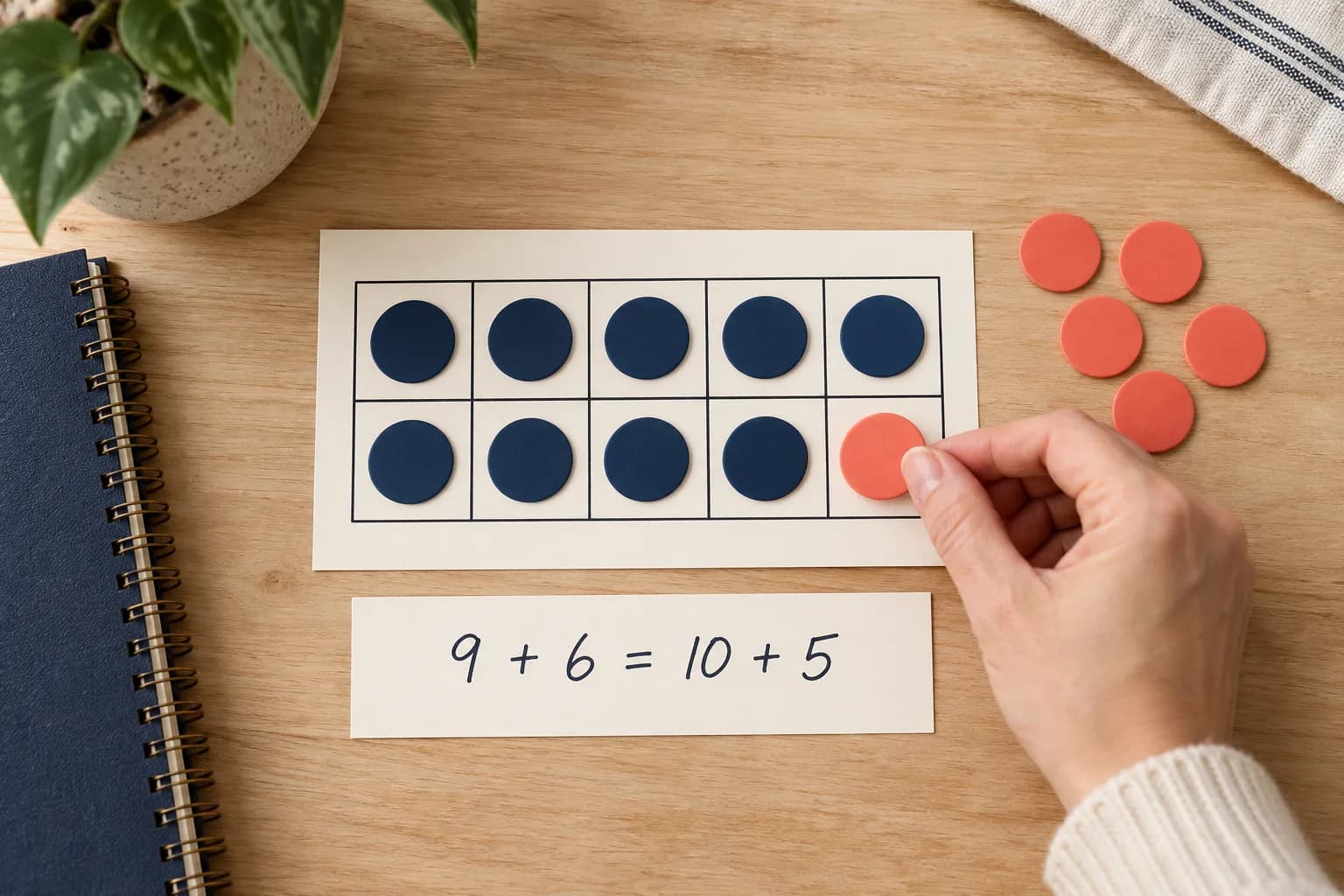
A ten-frame is two rows of five spaces. Its regular structure makes it a useful place to discuss quantities: a full row is five, a full frame is ten, and empty spaces can show what is missing. You can draw one on paper and use suitable counters or large paper squares.
Begin with quantities the child can count comfortably. The goal is to notice relationships, not to flash a card so quickly that the activity becomes a guessing contest.
Build and describe
Place four counters in the top row. Ask, “How many? How did you see it?” Accept counting, then point out that one more would complete the row of five. Move to a different small quantity and invite the learner to build it themselves.
When the frame contains seven, a child may describe five on top and two below. Connect that description to the total. You can write 5 + 2 = 7 when the notation is useful, but keep the concrete arrangement central at first.
Look at the spaces
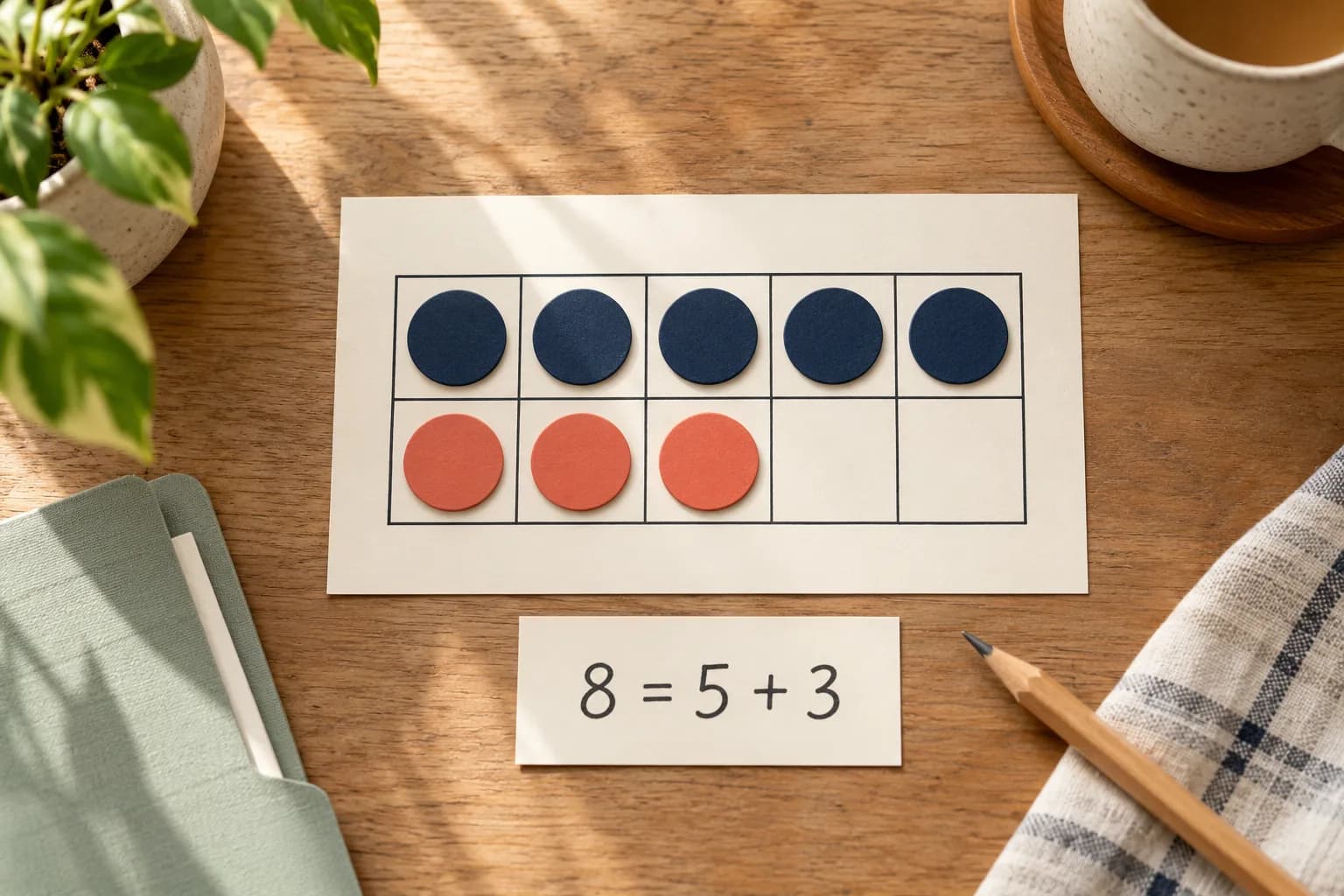
With eight counters in place, ask how many spaces are empty. Then ask how many more counters would fill the frame. Let the child add them and check.
This missing-part conversation prepares a useful relationship without requiring formal subtraction language immediately. Use both words and actions: “Eight are filled. Two are empty. Eight and two make ten.”
Compare two arrangements
Show six as a full row of five plus one. Then rearrange the same six counters into two rows of three. Ask whether the amount changed and how the child knows.
Return to the regular five-and-one arrangement when you want to emphasize the frame's structure. The comparison helps distinguish the number of counters from their position, while the familiar arrangement makes certain relationships easier to notice.
Choose a sensible next step
If a learner must recount every counter, keep the quantities small and invite descriptions without demanding instant recognition. If they readily see five and extra ones, explore missing parts to ten or a second frame for numbers beyond ten.
At home, use a quick “build my number” exchange: one person names a quantity, the other builds and explains it. In a classroom, ask pairs to compare two arrangements and describe what stays the same. Finish with a fresh example the child handles independently. That small observation will tell you more than how many frames they completed during the session.
Sources & further reading
Research background and Glow’s approach, alongside the original activity ideas in this guide.